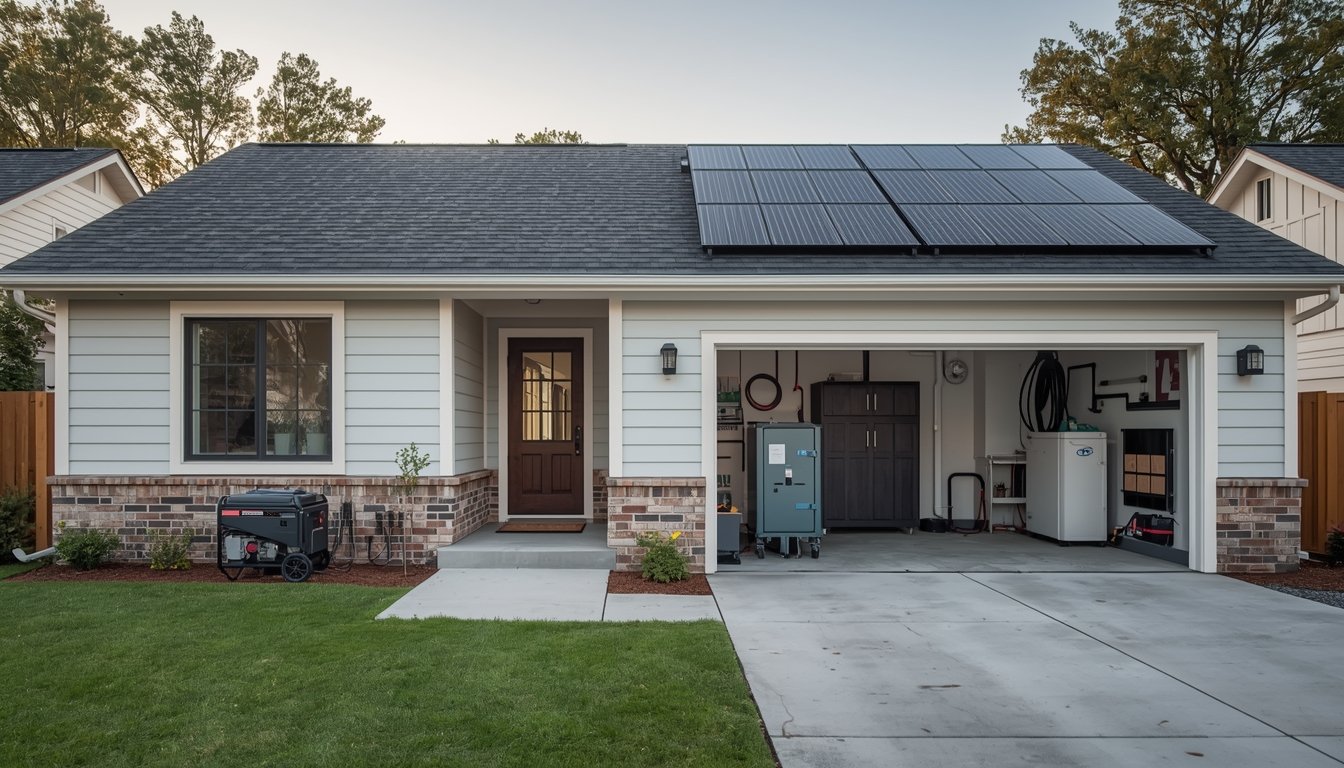
A home backup power system gives a house a secondary source of electricity when the utility grid goes down. It can be as simple as a portable power station for a refrigerator and internet router, or as complete as a standby generator or battery system designed to support essential circuits or the whole home.
The right system depends on what you need to keep running, how long outages usually last in your area, whether you want automatic backup power, and whether your home is better suited to a generator, battery, solar battery setup, portable power station, or a combination of systems. This guide explains the main options, how they work, and how to think through the decision before buying equipment or speaking with an installer.
What This Guide Covers
This guide gives you a broad overview of home backup power so you can understand the full landscape before choosing a system. It covers generator backup, battery backup, solar battery systems, portable power stations, transfer switches, essential circuits, fuel planning, installation issues, and safety considerations.
The goal is not to push one option for every home. A small apartment, a suburban house with frequent storm outages, a rural property with a well pump, and a large home with central air conditioning may all need very different backup power setups. If you are just starting, the Beginner’s Guide to Home Backup Power is a useful next step after this overview.
How Home Backup Power Systems Work
A backup power system works by supplying electricity from a source other than the utility grid. That source may be stored energy from a battery, fuel converted into electricity by a generator, or solar energy stored in a battery for later use.
Most systems are designed around either whole-home backup or partial-home backup. Whole-home backup aims to support most or all of the house, while partial-home backup focuses only on essential circuits such as the refrigerator, freezer, lights, outlets, sump pump, well pump, furnace controls, internet equipment, or medical devices.
The most important early step is understanding your power demand. Appliances use different amounts of electricity, and some devices need extra startup power. A refrigerator may use a moderate amount once running, while a central air conditioner, well pump, or sump pump may need a much larger surge when it starts. The What Size Home Backup Power System Do You Need? guide explains this sizing process in more detail.
Permanent generator systems usually connect through a transfer switch or automatic transfer switch. Battery systems and solar battery systems may connect through an inverter, subpanel, transfer equipment, or an integrated home energy system. Portable power stations are usually simpler because appliances plug directly into the unit, but they have more limited capacity.
Common Use Cases
The most common reason homeowners consider backup power is to keep essential appliances running during outages. For many homes, that means a refrigerator, freezer, lights, internet router, phone charging, garage door opener, furnace blower or controls, sump pump, well pump, and selected outlets.
Some households need backup power for medical devices, mobility equipment, refrigerated medication, or climate control. In those cases, reliability and runtime become more important than convenience. A small battery may be enough for phones and internet, but not enough for long outages or heavy loads.
Backup power is also useful in regions with hurricanes, winter storms, wildfire-related public safety shutoffs, heatwaves, aging grid infrastructure, or frequent rural outages. A homeowner in a storm-prone area may care most about fuel runtime and generator safety, while a homeowner in a public safety power shutoff region may prefer quiet battery backup or solar battery storage.
Another common use case is protecting food, work-from-home equipment, and basic comfort during short outages. In that situation, a portable power station or smaller generator may be enough. For more demanding needs, such as running central air conditioning or many circuits at once, you may need a larger standby generator or a professionally designed battery system. The How Much Backup Power Does a House Need During an Outage? article explains how to think about real-world outage loads.
Key Factors to Consider
- Power demand: Decide whether you need to run only essential appliances, selected circuits, or most of the house.
- Runtime: Consider whether your typical outage lasts minutes, hours, overnight, or several days.
- Fuel or storage capacity: Generators need fuel access, while batteries need enough stored energy and a way to recharge.
- Installation requirements: Permanent generators, transfer switches, and home battery systems may require permits, electrical work, inspections, and professional installation.
- Safety: Fuel-burning generators produce exhaust and must be used or installed correctly to reduce carbon monoxide and electrical hazards.
- Noise: Standby and portable generators create sound, while battery systems are usually much quieter.
- Indoor suitability: Portable power stations and battery systems can often be used indoors, while fuel-burning generators must not be operated inside homes, garages, or enclosed spaces.
- Budget: Portable solutions may cost much less upfront, while whole-home standby generators and solar battery systems can be major investments.
- Automatic operation: Some systems start automatically during an outage, while others require manual setup.
- Long-term maintenance: Generators need routine maintenance, fuel planning, and testing; batteries have lifespan, warranty, and cycle-life considerations.
Choosing the Right Option
The best option depends on the problem you are trying to solve. If you only need phones, internet, lights, and a small appliance, a portable power station may be enough. If you want to keep a refrigerator, freezer, sump pump, and several outlets running for longer outages, you may need a larger battery system, portable generator, or essential-circuit setup.
If you want automatic backup for a house and do not want to set up equipment during a storm, a standby generator is often the more practical generator option. It can connect to natural gas or propane and work with an automatic transfer switch, but installation cost, fuel supply, maintenance, noise, placement, and permits all matter.
If you prefer quiet backup power and want to avoid fuel storage, a home battery system may be more appealing. Batteries are especially useful for shorter outages, solar integration, essential loads, and indoor-safe backup. However, large battery systems can be expensive, and runtime depends heavily on battery capacity and household load.
Solar panels alone do not always power a home during a blackout. Many grid-tied solar systems shut down during outages unless they are paired with compatible battery and inverter equipment. If solar backup is part of your plan, the Solar Battery Backup Systems for Homes guide is a better place to compare how that setup works.
For buyers comparing several backup types, the most practical path is to list your essential appliances first, estimate runtime needs, decide whether you want automatic operation, and then compare generator, battery, and portable options from that point. The Best Home Backup Power Systems page is designed for that buyer-focused comparison once you understand the basics.
Limitations and Considerations
No backup power system is unlimited. A generator can run only while it has a safe fuel supply and is maintained properly. A battery can run only until its usable capacity is depleted. A solar battery system depends on battery size, inverter capacity, sunlight, system design, and the loads connected to it.
Undersizing is one of the most common mistakes. If the system is too small, it may shut down, trip, overload, drain too quickly, or fail to start larger appliances. Oversizing can also be expensive if you buy far more capacity than you actually need.
Installation is another major consideration. Transfer switches, standby generators, natural gas connections, propane tanks, battery systems, and critical load panels are not just product choices; they are also installation and safety decisions. Local codes, permits, inspections, utility rules, and manufacturer requirements may affect what is allowed at your home.
Safety should be treated as part of the system, not an afterthought. Portable generators must be placed outdoors and away from openings. Electrical connections must be made correctly. Fuel needs to be stored properly. Carbon monoxide alarms, proper placement, and safe operating habits are especially important for generator users.