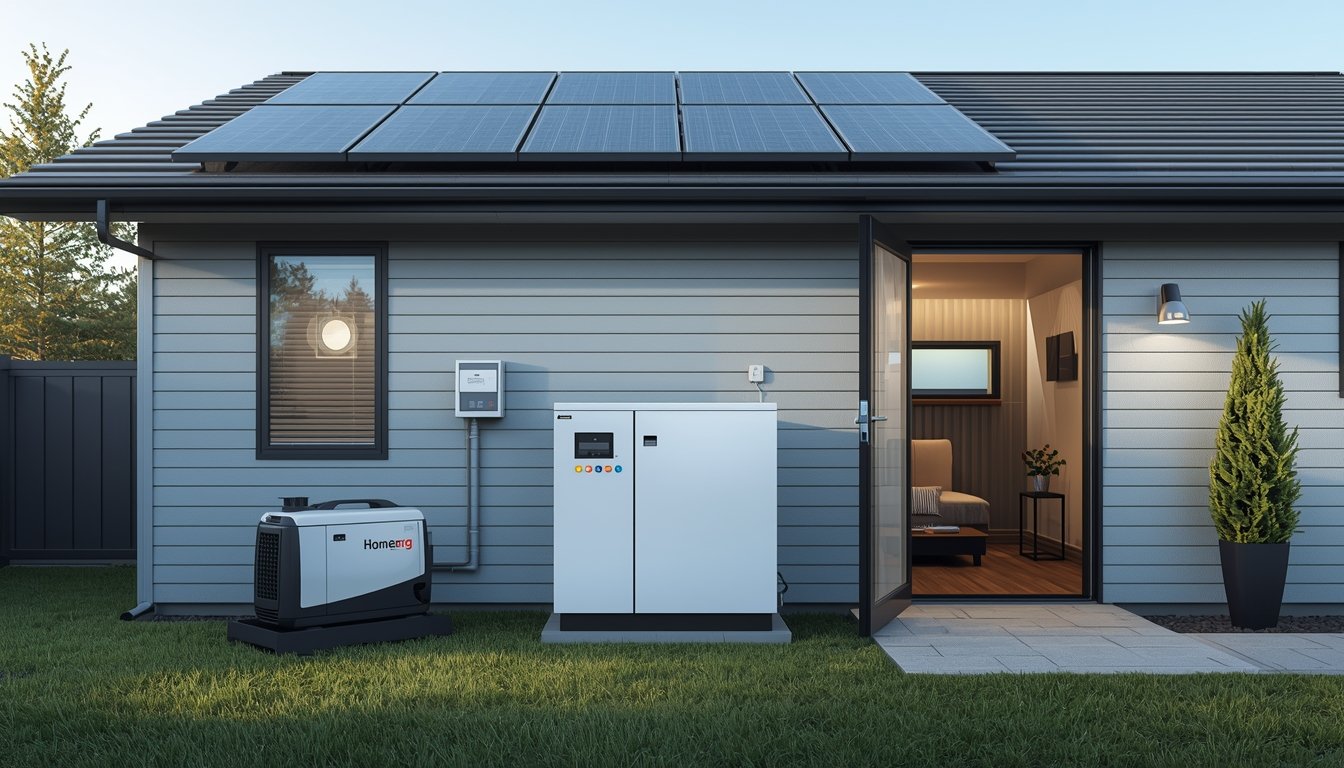
A typical home backup battery can power essential circuits for 8–12 hours or run an entire house for 2–4 hours on a single charge, depending on battery size and household energy use. Smaller batteries may only support a refrigerator and a few lights for a night, while larger systems can keep more appliances running longer. How long your house stays powered depends mostly on what you use and how much stored energy your backup battery provides.
What Factors Affect Backup Battery Run Time?
Several variables determine how long a backup battery will keep your home running. The most important factors are the battery’s total usable capacity (measured in kilowatt-hours, or kWh) and your household’s energy consumption. If your home uses a lot of power—by running multiple appliances or heating/cooling systems—the battery will discharge much faster.
Another consideration is the load you choose to support. Many homeowners backup only essential circuits, like the refrigerator, some lights, and internet. By powering fewer or more efficient items, you’ll stretch your battery further. The type and efficiency of your appliances also play a significant role, as older or power-hungry devices can quickly drain stored energy.
Temperature affects battery performance as well. Extremely cold or hot conditions reduce the available energy, which can shorten run time. Lastly, you should factor in inverter efficiency—because some energy is lost when converting DC battery power to the AC electricity your home uses. Together, these variables help explain why different homes see very different backup times, even with similar batteries.
Typical Backup Scenarios: Examples and Estimates
Let’s look at a few real-world scenarios. A basic 10 kWh battery, like those offered by many brands, will power essentials—such as your fridge, a few outlets, and lights—for about 10–15 hours if you’re careful. If you try to run most of your house, the same battery could be empty in 2–4 hours, especially with big draws like electric ovens or air conditioning.
Larger systems, such as a 20 kWh battery setup, offer about double the run time. This means you could get through a long overnight outage with careful energy use. Homes with solar panels may be able to recharge their batteries during the day, greatly extending backup time during multi-day blackouts. However, if the weather is cloudy or panels are shaded, solar won’t offer as much help.
Your exact backup time depends on your choices. Analyze your energy usage and consider which appliances are truly essential. For detailed breakdowns of what a battery can run, visit What Can a Home Backup Battery Run? for guidance on matching battery size with your specific backup needs.
Practical Tips to Maximize Battery Backup Duration
- Only power essential devices and circuits during outages.
- Switch to LED lights and high-efficiency appliances.
- Stagger appliance use—don’t run everything at the same time.
- Monitor your battery’s status through mobile apps or a smart panel.
- Consider adding solar panels to replenish your battery during daylight.
Using your backup battery efficiently can make a big difference in run time. Prioritizing critical appliances first, and avoiding energy hogs, lets your stored energy last much longer. Upgrading to efficient devices and being mindful of simultaneous usage can help you get through longer outages. Many battery systems have apps so you can keep an eye on consumption and state of charge in real time. For maximum peace of mind, pairing your battery with rooftop solar is a powerful way to extend operation—especially for homes in areas with frequent or long-lasting outages.