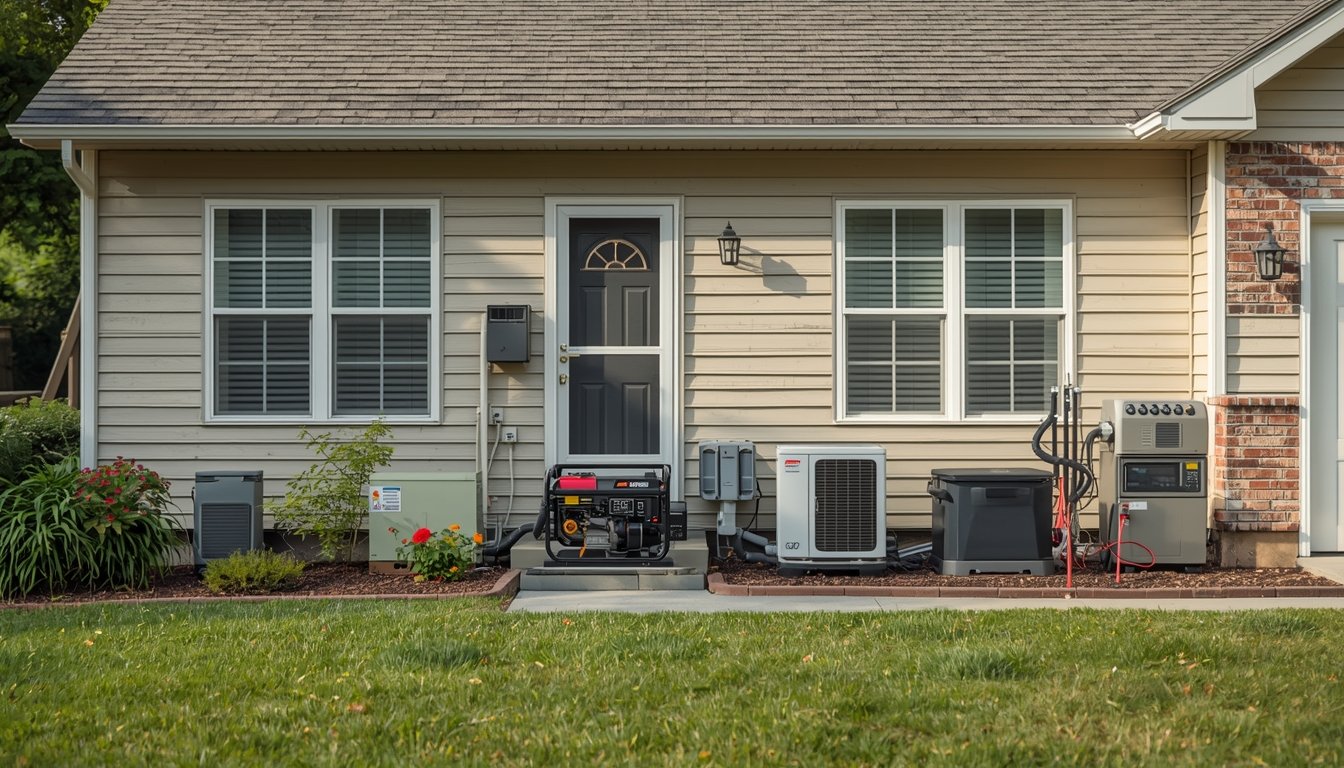
To size a whole-house generator, start by totaling the wattage needed for all essential appliances and systems you want powered during an outage. This total wattage, plus a buffer for startup surges, will determine your generator’s minimum size. For many homes, this means choosing a model in the 12kW to 24kW range, but specifics depend on your square footage, climate, and important devices. If you need help picking a model to fit your needs, see our comprehensive guide to the Best Standby Generators for Home Backup for comparisons and details.
Understanding Power Needs for Your Home
Sizing a whole-house generator begins with understanding exactly how much electricity your home uses. Every appliance, fixture, and system in your house draws power, but not all need to be backed up during an outage. Start by making a list of everything you’d like to run during an outage—think refrigerators, furnace, sump pump, well pump, lights, Wi-Fi, and some outlets for essentials.
Next, check each item’s wattage, usually listed on the appliance tag or in the manual. Critical systems like a central air conditioner or electric water heater will draw much more power than lights or chargers. Remember, some appliances, particularly ones with motors or compressors, use more power during startup than when running normally.
Add up the running wattages of your essentials. To ensure safe operation, also calculate total starting wattage for devices that surge when turned on. If your total comes to 9,000 to 11,000 running watts, you’ll likely want a generator rated at least 12kW, giving yourself some safety margin. For larger homes or if backing up high-demand systems, you may require 20kW or more.
Calculating Appliance and System Wattages
It’s important to distinguish between running watts (what a device uses once operating) and starting watts (an initial surge many appliances need). For example, refrigerators may need 600 running watts but surge to 2,000 watts at startup. Heating, Air Conditioning, and well or sump pumps can have even higher surges.
To make your calculations, gather a list of all devices you’d power during an outage. Sum the running wattages first, and then account for the highest single startup (surge) wattage among your devices, since these don’t usually all start at the exact same moment. Add this highest startup surge to the total running wattage to get your minimum generator requirement.
Don’t overlook hidden loads like garage door openers, home office equipment, or medical devices. Also, if your home has entirely electric heating or a large central AC system, your wattage needs can skyrocket. For electric ranges, ovens, or dryers, the numbers increase significantly—often requiring a much larger generator or the willingness to forgo some loads during power outages to stay within your generator’s limits.
Factors That Affect Generator Sizing
- Home square footage and number of stories
- Climate and extreme weather considerations
- Fuel source compatibility and runtime expectations
The size and layout of your home greatly impact your backup power needs. Larger homes often require more lighting, have additional refrigerators or freezers, and more HVAC zones. For multi-story houses or properties with multiple HVAC systems, the added electrical draw is significant.
Climate also factors into generator sizing. If you live in a region with severe winters or hot, humid summers, running heating or cooling systems during an outage is likely a priority. These are some of the most power-hungry appliances in any home, so your generator choice should accommodate them when possible.
Fuel source matters, too. Standby generators most commonly run on natural gas or propane. The size of your fuel system and your generator’s runtime requirements will influence your choice. If you’re in a rural area without municipal gas, you’ll need a generator compatible with larger propane tanks—affecting installation and total system cost. Make sure to consider both fuel availability and your average outage length when sizing a system for your needs.
Popular Generator Sizes and Typical Uses
Most whole-house standby generators for residential backup range from 9kW to 24kW. Generally, a 9kW-12kW unit can power basic circuits—fridge, sump pump, lights, and a small central heating system—suitable for smaller homes or minimal backup needs. Medium-sized homes with central air or electric water heaters might need a 14kW-18kW generator, which can handle multiple large appliances and additional lighting.
For full backup—including electric cooking, laundry, and central AC in larger residences—generators in the 20kW-24kW range are standard. These units can support most or all circuits in a typical home without sacrificing comfort. Homeowners with even greater electric demands, specialty equipment, or guest suites may need to consider parallel setups or commercial-grade generators, but this is rare for standard residential properties.
Keep in mind, larger isn’t always better. Oversizing a generator drives up costs and may reduce fuel efficiency. Aim for a unit that covers your running loads with a margin for startup surges. Consult with a licensed electrician if you’re unsure—professional load calculations are worth the peace of mind and ensure proper transfer switch sizing and safe operation for years to come.
Common Sizing Mistakes to Avoid
- Ignoring startup (surge) wattages when adding loads
- Trying to back up too many non-essential circuits
- Choosing a generator solely based on home size, not actual loads
Many first-time buyers underestimate how much power appliances draw at startup. For example, failing to account for the surge of a central air conditioner can quickly overload a properly sized generator. It’s crucial to use both running and surge wattages in your total calculations to prevent frequent system overloads or automatic shutdowns.
Another common pitfall is attempting to run every circuit in the home when only essentials are truly necessary. Focusing your backup power on truly vital appliances saves money, increases runtime, and may let you choose a more affordable and efficient unit. Finally, avoid picking a generator just because it’s recommended for your square footage. Lifestyle, equipment, and critical electrical loads must take priority. Customizing your backup plan ensures you’re not overspending or, worse, left in the dark when you need it most.
Installation, Upgrades, and Final Tips
Once you’ve sized your generator, professional installation is vital. Licensed electricians will assess your existing electrical panel, recommend the right transfer switch, and safely integrate your new system. Consider whether you want to future-proof your installation in case you add more appliances or finish a basement. Upgrading wiring or panel capacity during generator installation can pay off long-term.
Don’t forget maintenance needs. Regularly serviced generators last longer and provide dependable backup during outages. Keep extra oil, air filters, and spark plugs on hand and schedule professional inspections annually. If you upgrade major appliances or your family’s power use rises, review your generator size so you’re not caught off-guard during the next outage.
Finally, compare generator brands, warranty terms, and available local service before buying. Getting a right-sized generator is the foundation of reliable backup power—combining it with smart installation and regular service maximizes your home’s resilience and comfort.