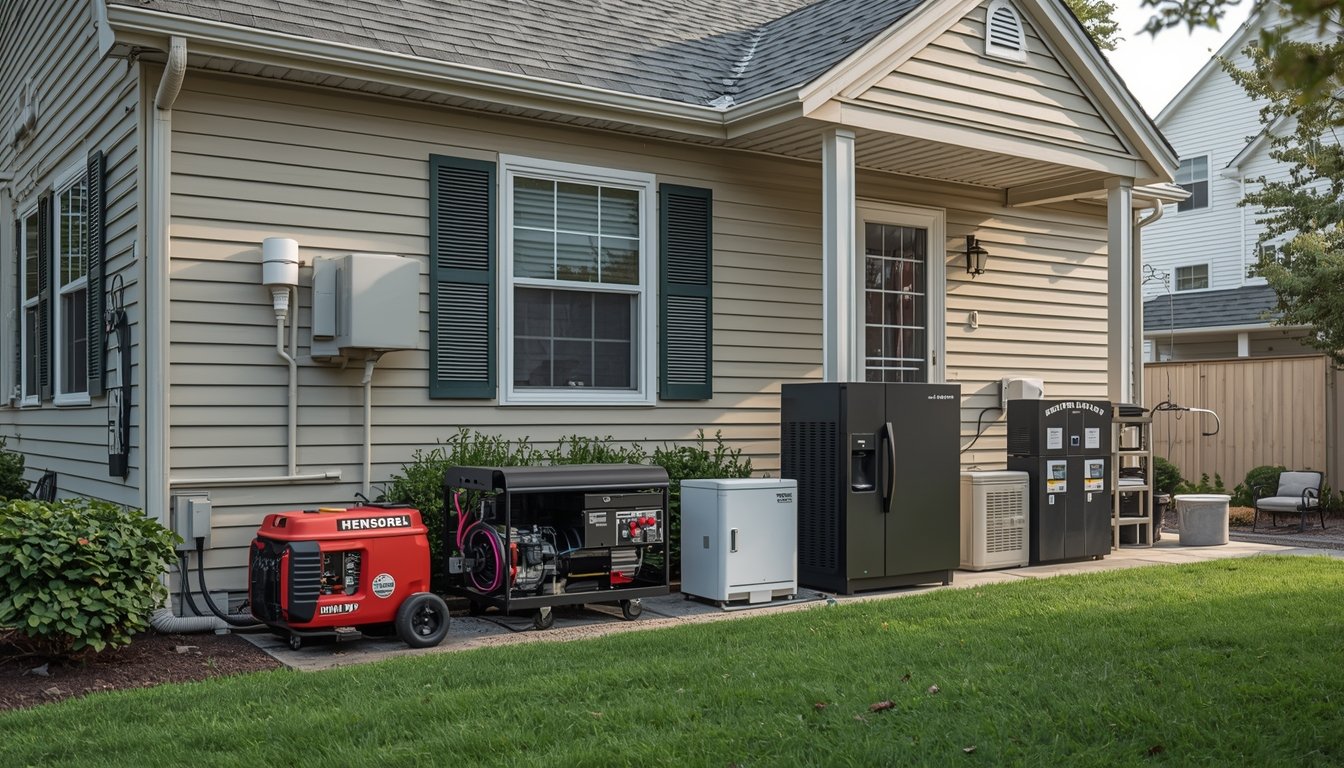
To back up essential circuits during power outages, you need to identify which circuits are mission-critical, determine their power needs, and connect them to your backup solution with proper safety measures. This ensures key appliances and systems remain operational without oversizing your generator or battery bank. Backup planning isn’t just about picking a power source; it’s about mapping out which parts of your home actually require protection. For more detail on connecting backup power safely, check this guide: Do You Need a Transfer Switch for a Backup Generator?
Identifying Essential Circuits for Backup
The first step in backup planning is deciding which circuits are truly essential. Start by listing your must-have appliances—think refrigerator, medical equipment, sump pump, and basic lighting. Skip luxury loads like central air or entertainment systems unless absolutely necessary. You want to ensure survival, safety, health, and security, not convenience.
Check your main electrical panel for labeled circuit breakers. Match these to the rooms or appliances you listed. If the panel isn’t labeled, schedule a quick test: turn breakers off one by one and note what goes out. This helps you map circuits and avoid missing anything critical.
Be realistic about what you can power. Most backup generators and batteries cannot handle the entire home, nor is it efficient to try. Pick circuits supporting just enough for safe, comfortable living until normal power returns. When in doubt, start with less and adjust as needed after your first backup experience.
Calculating Backup Power Requirements
Once you know your essential circuits, you need to determine how much power they draw. Look at the wattage labels on each appliance. For things like lights or fridges, multiply voltage (typically 120V in the US) by the number of amps listed—that’s your wattage. Sum up the wattage for all essentials you plan to back up.
Consider surge wattage too: some appliances, like refrigerators or pumps, need extra power briefly when starting. Your backup system must handle these short spikes. Check manufacturer specifications or use a watt meter for accuracy. Underestimating surge requirements is a common and easily avoided pitfall.
Total your running wattage and add a buffer for surges. Size your generator or battery system accordingly. This calculation prevents overload, nuisance shutdowns, or damage to both backup equipment and home appliances. Thorough power requirement assessment ensures the transition to backup power is smooth and reliable.
Choosing Your Backup Power Solution
- Portable generators
- Standby generators
- Home battery systems
Portable generators are affordable and flexible, but they require manual setup and fueling. They’re best for short outages or smaller homes where only a few circuits are needed. Standby generators are permanently installed and automatically restore power to selected circuits when an outage occurs. They cost more upfront but provide seamless, hands-off operation. Home battery systems—like those using lithium-ion technology—deliver silent, maintenance-free backup and can be paired with solar for sustainable power. However, their capacity may not match that of larger gas generators unless scaled up significantly.
Choose based on your typical outage duration, budget, and fuel preferences. Also factor in local weather, as extended outages might favor a standby generator. Remember, each option connects to your essential circuits differently and may require professional installation or upgrades to your electrical panel.
Setting Up Circuit Isolation and Transfer
Isolating your essential circuits is a critical safety step. This prevents backfeeding electricity into the grid, which could endanger utility workers or damage equipment. Use a transfer switch or a dedicated subpanel to separate and select the circuits your backup system will power. A transfer switch lets you safely and legally switch load from the utility to the backup source.
Manual transfer switches require you to flip a switch during an outage, while automatic versions detect outages and switch power automatically. For battery backup or solar systems, circuit subpanels are common—only the pre-selected circuits get power when grid electricity fails.
Professional installation is strongly recommended for transfer equipment. Incorrect wiring is a major safety and code violation risk. This step ensures backup power is isolated, circuits are protected, and the transition during an emergency is as seamless as possible.
Testing and Maintaining Your Backup System
- Routine load testing
- Backup power source maintenance
- Circuit identification checks
Regularly testing your backup power system is essential for long-term reliability. Periodic load tests confirm that your generator or battery can start automatically—and that your chosen essential circuits receive power. Don’t wait until an emergency to find a wiring or capacity issue.
Maintenance is equally important. Keep fuel fresh for generators, replace worn parts, and inspect batteries for capacity loss or corrosion. Check that labels and circuit identifications on the panel are visible and accurate. As your household needs change or you add appliances, revisit your list of essential circuits and adjust your plan to fit new priorities. This proactive approach minimizes surprises and keeps your backup solution effective year after year.