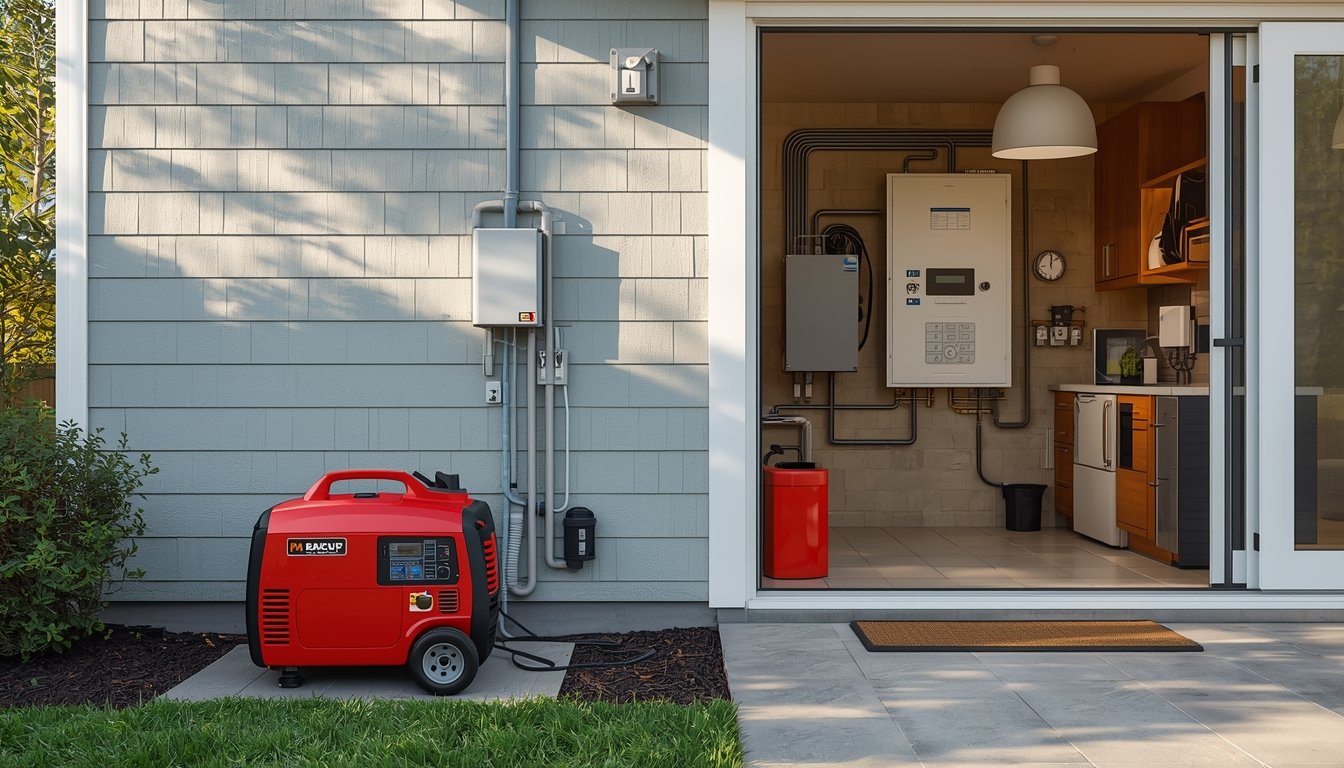
An essential load in home backup power refers to the minimum group of electrical devices, circuits, or appliances that a backup power system is sized to support during an outage. These loads are selected for their importance to daily living, safety, or health. In backup planning, only essential loads are prioritized to conserve energy and extend runtime when primary power is unavailable.
How It Works
During a power outage, a home backup system—such as a generator or battery backup—typically does not supply electricity to the entire house. Instead, it is configured to deliver power only to selected essential loads. These are determined based on what needs to operate continuously, such as refrigeration, some lights, heating or cooling controls, and critical medical equipment. Essential loads are usually wired to specific circuits, which the backup system is set up to power automatically or manually when the main utility grid fails.
What It Can Do
Selecting essential loads allows homeowners to maintain crucial services while conserving backup energy. The system ensures that important household functions stay operational even if most of the home’s electrical circuits remain without power.
- Keep food safe by powering refrigerators and freezers
- Provide basic lighting for safety and movement
- Maintain communication by keeping outlets for phone chargers or modems powered
- Run necessary medical equipment if required
- Support essential heating system controls or sump pumps to prevent damage
Focusing on essential loads helps balance comfort, safety, and energy conservation during outages. Instead of using excess energy for non-essential appliances, the available backup power is directed where it matters most, potentially extending the runtime of the backup system during longer outages. Understanding which loads are truly critical is a key step—detailed planning is often advised in the early stages of setting up home backup power.
Limitations and What It Cannot Do
Although essential loads strategies maximize available power, they have clear limitations. Home backup systems designed for essential loads cannot operate all household appliances or meet high-energy demands during an outage. Heavy appliances like central air conditioning, electric water heaters, and laundry machines are typically excluded unless specifically planned for and appropriately sized equipment is installed. Installing or modifying essential load circuits usually requires electrical expertise and proper safety compliance.
Another constraint is that what qualifies as “essential” can differ from one household to another. If backup capacity is not well-matched to the chosen essential loads, circuits may be overloaded or forced to shut down during prolonged outages. Even with careful selection, some comfort or convenience features are likely to be unavailable until full grid power returns.
When It Works Best
Focusing on essential loads works best in situations where backup power capacity is limited, such as with portable generators or modest battery systems. It is especially useful for households wanting cost-effective resilience without investing in whole-home solutions. Prioritizing critical needs—such as refrigeration, security, or medical devices—provides a safe and practical balance between functionality and efficiency.
Good results are achieved when the essential load list is reviewed and updated as needs change, and when the backup system is tested periodically. For detailed guidance on choosing which circuits and appliances to include, see the Essential Circuit Backup Planning Guide for in-depth planning strategies.
Common Misconceptions
Some assume that an essential load setup powers the whole house, which is not the case unless explicitly designed for whole-home backup. Others believe that backup power can automatically prioritize or intelligently switch loads, but most systems require predefined wiring and planning. There is also a misconception that any appliance can be included by simply plugging it in, but only circuits wired for backup are protected.
Final Answer Summary
An essential load is the group of devices or circuits that home backup power systems are designed to support during an outage, focusing on critical needs for safety and daily living. Understanding and correctly selecting essential loads ensures backup energy is used efficiently and effectively under real-world constraints. Limitations exist, so realistic planning and periodic review are recommended for the best results.