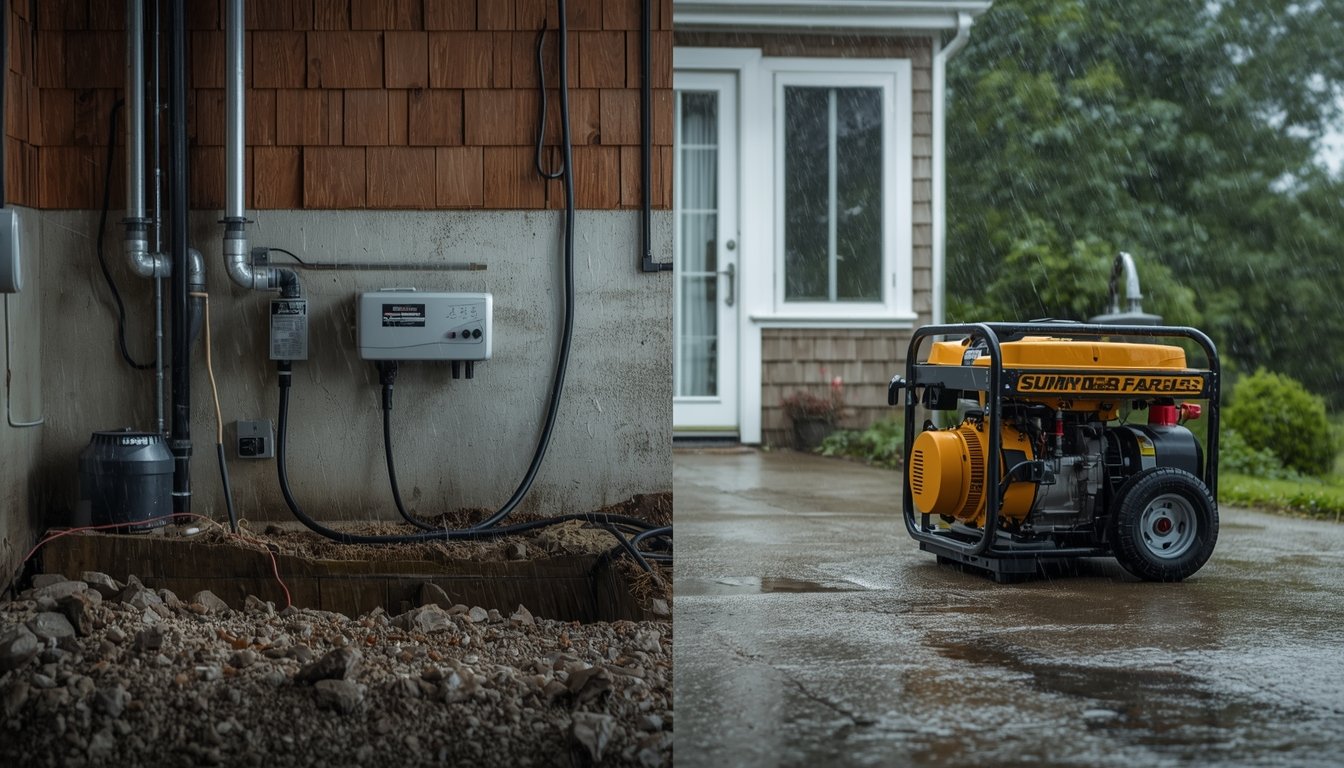
A sump pump battery backup is usually the better choice for automatic flood protection during short or moderate power outages, while a generator is better for longer outages or broader home backup needs. The main difference is that a battery backup can turn on automatically at the sump pit, while a generator needs safe outdoor setup, fuel, and a proper connection plan.
For many homes, the best solution is a dedicated sump pump battery backup first, with a generator used as a broader backup option if outages are long or the home has several critical loads. This comparison explains the practical difference, then compares approved products that fit each approach.
Quick Picks
- Best overall for sump pump battery backup: WAYNE ESP25 / ESP25N Battery Backup Sump Pump, because it gives homeowners a dedicated backup pump for outage protection.
- Best for powering an existing pump: Pump Sentry 822PS Sump Pump Backup System, because it is designed as an inverter-style backup for a compatible AC sump pump.
- Best generator for high-output home backup: Westinghouse 14500 Peak Watt Tri-Fuel Home Backup Portable Generator, because it suits broader backup plans beyond the sump pump alone.
- Best generator for fuel flexibility: Champion Power Equipment 12,500-Watt Electric Start Tri Fuel Home Backup Portable Generator, because it gives homeowners a strong tri-fuel generator alternative.
WAYNE ESP25 / ESP25N Battery Backup Sump Pump

A dedicated battery backup sump pump for homeowners who want automatic outage protection at the sump pit. Check current price
The WAYNE ESP25 / ESP25N Battery Backup Sump Pump is the best fit for homeowners who want a dedicated backup pump rather than relying on a generator. It is especially relevant if the main concern is basement flooding during a power outage.
Best for: Homeowners who already have a primary sump pump and want a separate battery backup pump for outage protection.
Main advantage: It can provide automatic backup pumping at the sump pit without needing to set up a generator during the storm.
Main limitation: It still depends on correct installation, battery capacity, sump pit space, float switch placement, and discharge routing.
Pump Sentry 822PS Sump Pump Backup System

An inverter-style backup system for powering a compatible existing AC sump pump during outages. Check current price
The Pump Sentry 822PS Sump Pump Backup System is a better fit if you want battery backup power for a compatible existing AC sump pump rather than adding a separate backup pump. It is most useful when the current pump is reliable and correctly sized for the basement.
Best for: Homeowners who want an inverter-style backup system for an existing compatible sump pump.
Main advantage: It can let the existing pump keep operating during a power outage when the pump and battery setup are properly matched.
Main limitation: Compatibility is critical. The pump’s startup demand, running load, battery setup, and outage conditions must all fit the system.
Westinghouse 14500 Peak Watt Tri-Fuel Home Backup Portable Generator
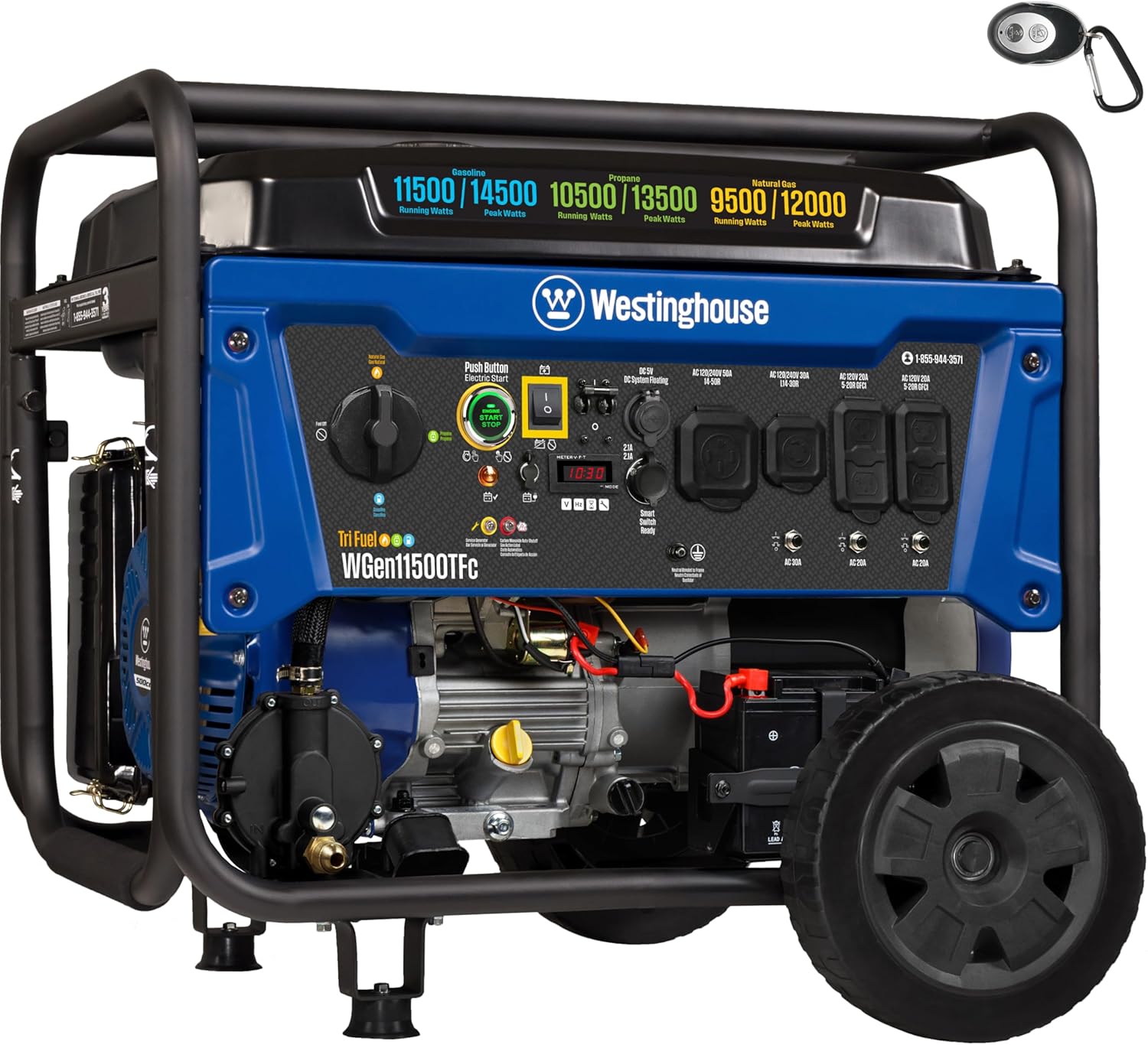
A high-output portable generator for homeowners who need backup power beyond one sump pump. Check current price
The Westinghouse 14500 Peak Watt Tri-Fuel Home Backup Portable Generator is the stronger fit if you need backup power for more than the sump pump. It may suit homes where the outage plan also includes refrigerators, freezers, lights, routers, or other essential circuits.
Best for: Homeowners who want high-output portable generator backup for several outage loads, not just basement flood protection.
Main advantage: It can support a broader emergency power plan when used safely and connected correctly.
Main limitation: It is not automatic sump-pit protection by itself and must be operated outdoors with proper fuel, placement, and connection safety.
Champion Power Equipment 12,500-Watt Electric Start Tri Fuel Home Backup Portable Generator

A tri-fuel portable generator option for homeowners who want flexible fuel choices during outages. Check current price
The Champion Power Equipment 12,500-Watt Electric Start Tri Fuel Home Backup Portable Generator is another strong generator option if fuel flexibility matters. It is better suited to broader outage planning than to sump pump-only backup.
Best for: Homeowners who want generator backup with gasoline, propane, and natural-gas options.
Main advantage: Tri-fuel capability gives more fuel planning flexibility than a gasoline-only generator.
Main limitation: It still requires safe outdoor operation, fuel planning, storage, and a proper way to power the sump pump without unsafe extension cord or backfeed setups.
Comparison Summary
- Choose battery backup if your main priority is automatic sump pump protection during outages.
- Choose a generator if you need longer runtime or backup power for multiple home essentials.
- Battery backup is usually simpler for sump pumps because it can be installed near the sump pit and activate automatically.
- Generators are stronger for longer outages but require outdoor operation, fuel, and safe connection planning.
- Do not use a generator indoors or in a garage, basement, shed, enclosed porch, or near windows and doors.
- Do not rely on one solution blindly if your basement has fast water inflow or serious flood risk.
Final Verdict
For most sump pump-only situations, a battery backup is the better first choice. The WAYNE ESP25 / ESP25N Battery Backup Sump Pump is the strongest fit if you want a dedicated backup pump, while the Pump Sentry 822PS Sump Pump Backup System is better if you want inverter-style backup power for a compatible existing pump.
A generator makes more sense if your backup plan includes more than the sump pump. The Westinghouse 14500 Peak Watt Tri-Fuel Home Backup Portable Generator is the stronger high-output choice, while the Champion Power Equipment 12,500-Watt Electric Start Tri Fuel Home Backup Portable Generator is a strong fuel-flexible alternative.
The safest approach for high-risk basements may be both: a sump pump battery backup for automatic flood protection and a generator for longer outages or broader home backup. Avoid relying only on a generator if nobody will be home to set it up when the power fails.