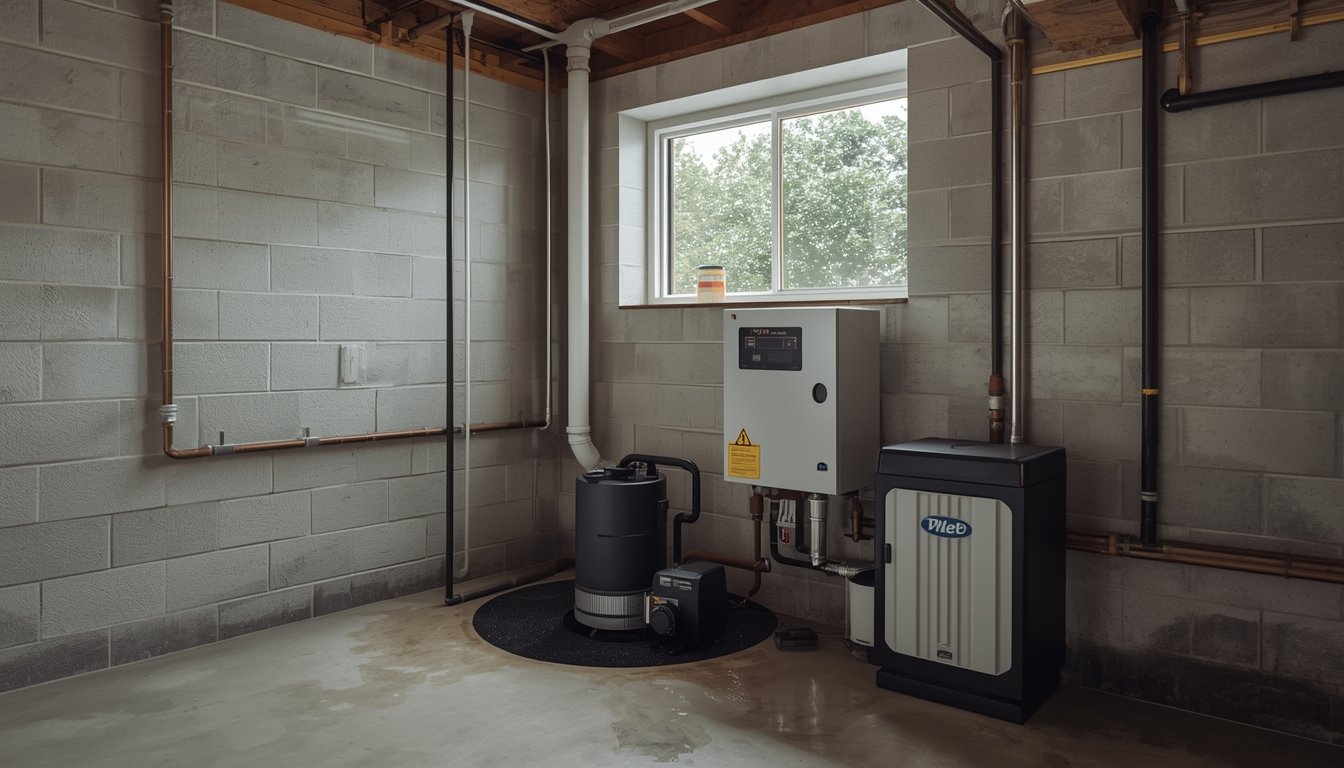
A sump pump inverter backup uses a battery and inverter to keep a compatible AC sump pump running when grid power fails. It can be a good option if your existing pump is reliable and properly sized, but it must be matched carefully to the pump’s startup demand, running load, battery capacity, and outage conditions.
This type of system is different from adding a separate backup pump. Instead of installing another pump in the pit, the inverter supplies backup power to the pump you already use.
How an Inverter Backup Works
An inverter backup system sits between the sump pump, battery, and normal wall power. When utility power is available, the system keeps the battery charged and allows the pump to operate normally from household electricity.
When the power goes out, the inverter changes stored DC battery power into AC power that can run a compatible sump pump. This lets the existing pump continue operating, provided the inverter can handle the pump’s startup surge and running load.
This is why inverter backup is a useful but specific solution. It is not just a generic battery with an outlet. It needs to work with a motor-driven pump that may briefly draw more power when it starts.
If you are comparing this approach against a dedicated backup pump, it helps to review the best battery backup for existing sump pump options first. That makes it easier to decide whether your home needs backup power for the current pump or a separate backup pump in the pit.
When This Setup Makes Sense
An inverter backup makes the most sense when your current sump pump is in good condition and already handles water well during normal storms. If the main pump is strong, reliable, and compatible, keeping it powered during an outage can be a practical solution.
This approach can also be useful when the sump pit is crowded. Some pits do not have enough room for an additional backup pump, float switch, and extra plumbing. In that situation, an inverter may avoid some of the space problems that come with adding a second pump.
It can also reduce plumbing changes because the existing pump and discharge path may remain in use. That does not mean installation should be rushed, but it can make the project simpler than replacing the whole sump setup.
The main condition is compatibility. If the pump draws too much power, has a high startup surge, or runs very frequently during storms, the inverter and battery may need to be larger than expected.
Key Compatibility Checks
- Check the pump’s running watts or amps before choosing an inverter.
- Allow for compressor-style motor startup surge, not just normal running load.
- Confirm the inverter supports the pump horsepower and electrical demand.
- Use a compatible deep cycle battery type and capacity.
- Make sure the system can switch automatically during an outage.
The most common mistake is checking only the pump horsepower and assuming the system will work. Horsepower gives a rough clue, but the actual electrical load is what matters. A backup inverter must be able to start the pump, keep it running, and do that repeatedly during a storm. If the pump cycles often, the battery drains faster. If the startup draw is too high, the system may fail even when the battery still has charge left.
Battery Size and Runtime Planning
Battery capacity determines how long the inverter backup can keep the pump available during an outage. A larger battery generally gives more stored energy, but runtime still depends on how often the pump runs and how much power each cycle requires.
A sump pump that runs for a few seconds every several minutes will use far less energy than one running almost continuously. That is why a battery that seems adequate in one basement may be too small in another basement with heavier water inflow.
Deep cycle batteries are commonly used because they are designed to provide sustained power over time. AGM batteries are popular in many backup applications because they are sealed and lower-maintenance than flooded batteries, but compatibility with the inverter or charger still matters.
Battery age also affects runtime. A battery that worked well when new may lose capacity over time, so testing before storm season is important. For higher-risk basements, runtime planning should include a margin rather than assuming the battery will deliver its full rated capacity during a long outage.
Limitations to Understand
- An inverter backup does not fix an undersized or failing sump pump.
- Runtime can be short if the pump runs frequently during heavy rain.
- The system may not work if the pump startup demand exceeds the inverter rating.
- A battery alone does not provide protection unless the full system is compatible.
- Installation still needs safe electrical setup and correct battery placement.
An inverter system can be very useful, but it should not be treated as a complete flood solution by itself. If the sump pit fills rapidly, the discharge line is restricted, or the primary pump is already struggling, backup power alone may not solve the problem. In those cases, the home may need a better primary pump, a dedicated backup pump, a high-water alarm, improved drainage, or a professional review of the full sump system.
Final Recommendation
An inverter backup is a good choice when your existing AC sump pump is reliable, compatible, and worth keeping in service during a power outage. It is especially useful when you want to avoid adding a second pump or when the sump pit does not have much extra room.
A dedicated backup pump may be better if you want a separate pumping path that does not depend on the primary pump. A complete primary-and-backup system may be better if the current pump is old, weak, or due for replacement.
The safest sizing approach is to check the pump’s actual electrical demand, choose an inverter that can handle startup surge, and use a battery with enough capacity for your realistic outage and water inflow conditions. Do not size the system only for ideal weather or occasional pump cycling.
For homes with finished basements, frequent storms, or fast water entry, it is better to build in more backup margin. A sump pump backup system is only useful if it can keep up when the power fails and the water is still rising.