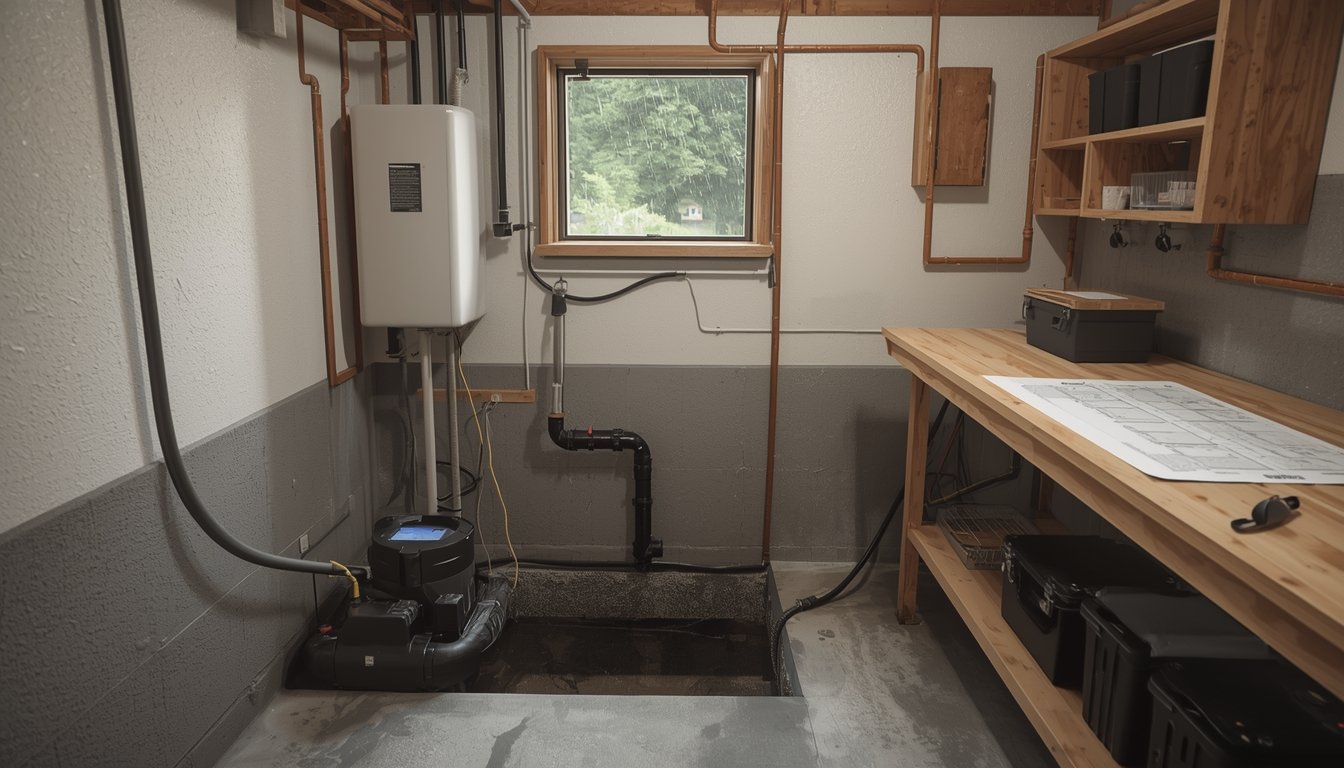
A sump pump battery backup should be sized by pump load, pumping frequency, battery capacity, and expected outage length. For many homes, a 12V deep cycle battery around 75Ah to 100Ah can support a backup sump pump for short to moderate outages, but heavier water inflow, larger pumps, and longer storms may require more capacity or a stronger backup system.
The safest approach is to size the backup around real water conditions, not just the pump label. If you are still choosing the system itself, start with the best battery backup sump pump systems before deciding how much battery capacity you need.
Start With the Pump Type
The first sizing question is whether you are backing up a dedicated battery backup pump or trying to power an existing AC sump pump through an inverter. These are different setups, and they do not use battery power in the same way.
A dedicated backup sump pump usually runs from a 12V battery and is designed specifically for outage protection. In this setup, the battery powers the backup pump only when the main pump cannot run or when water rises high enough to trigger the backup float switch.
An inverter backup system works differently. It uses battery power to run a compatible AC sump pump when grid power fails. That can be useful if your existing pump is strong and compatible, but the inverter and battery must be able to handle the pump’s startup demand and running load.
This matters because pump size alone does not answer the battery question. A small pump running constantly during heavy water inflow can drain a battery faster than a larger pump that only cycles occasionally. The amount of water entering the sump pit is just as important as the pump itself.
Key Sizing Factors
- How many amps or watts the sump pump uses while running
- How often the pump cycles during heavy rain
- How long outages usually last in your area
- Whether the system uses a dedicated DC backup pump or an inverter
- How much usable capacity the battery can safely provide
These factors work together. A 100Ah battery may be enough for a home where the pump only runs occasionally, but it may be too small for a basement where water enters the pit quickly during storms. A backup system does not drain based only on time; it drains based on how often the pump has to run and how much power each cycle requires.
This is why two homes with the same battery can have very different results. One homeowner may get many hours of protection because the pump cycles every few minutes. Another may drain the battery much faster because the pump runs almost continuously during heavy rain. Sizing should always include a safety margin rather than assuming perfect conditions.
Why Water Inflow Matters More Than the Label
The pump label tells you part of the story, but the water entering the sump pit tells you the more important part. A sump pump backup system only matters when water is actually rising, so the backup must be sized for the worst realistic storm conditions in your home.
If your sump pit only fills slowly, a moderate backup battery may provide useful protection through a short outage. The pump may run in short bursts, rest for several minutes, and conserve battery between cycles.
If your sump pit fills quickly, the backup system has to work harder. The pump may cycle more often or run for longer periods, which drains the battery faster. In homes with a high water table, poor drainage, or heavy storm inflow, a small battery may not provide enough protection.
The discharge height also matters. A pump moving water up a higher vertical lift works harder than one with an easier discharge path. Long discharge runs, check valves, and plumbing restrictions can also affect how much work the pump must do.
Battery Capacity Guidelines
- 75Ah can be suitable for lighter-duty backup needs and shorter outages
- 100Ah is a common practical starting point for many residential backup setups
- Multiple batteries may be useful where outages are longer or water inflow is heavy
- AGM batteries are common for backup systems, but compatibility still matters
- Battery age and condition can reduce real-world runtime
Battery size should be treated as a planning range, not a guarantee. A 100Ah battery does not mean the pump will run for a fixed number of hours in every basement. Runtime depends on pump draw, cycling frequency, discharge conditions, battery health, and how much of the battery capacity the backup system can actually use.
Do not assume a larger battery is automatically compatible. Some backup pump systems and chargers are designed for specific battery types or capacity ranges. Before buying, check the backup system requirements, battery chemistry, terminal style, charging limits, and enclosure recommendations. The battery must fit the system electrically and physically, not just look large enough on paper.
When to Size Up
You should size up when the sump pump protects a finished basement, stored valuables, mechanical equipment, or any area where flooding would cause major damage. In those cases, a small backup margin may not be worth the risk.
Size up if your area gets long storm outages or if you have already seen the sump pump run frequently during rain. A backup battery that works well during a minor outage may not be enough during the storm that causes the power failure.
You should also consider a larger or more complete backup setup if your current pump runs often even when power is on. Frequent normal operation suggests the system may have to work hard during an outage too.
For high-risk basements, sizing is not just about battery capacity. You may also need a stronger primary pump, a dedicated backup pump, a high-water alarm, better discharge routing, or drainage improvements. Battery backup is important, but it should be part of a broader flood-prevention plan.
Final Sizing Recommendation
For many residential sump pump backup systems, a 75Ah to 100Ah deep cycle battery is a practical starting range, with 100Ah often making more sense when the basement has meaningful flood risk. Smaller batteries may be acceptable for lighter-duty backup, but they leave less margin during heavy rain or longer outages.
If your sump pump runs often, your basement is finished, or storms in your area can knock out power for many hours, choose more capacity and a stronger backup plan. That may mean a larger battery, multiple compatible batteries, a full backup sump pump system, or an inverter setup matched carefully to the existing pump.
The best size is the one that matches the pump load, expected cycling, outage duration, and water volume entering your sump pit. Guessing too small can leave the basement exposed at the exact moment the backup system is needed most.