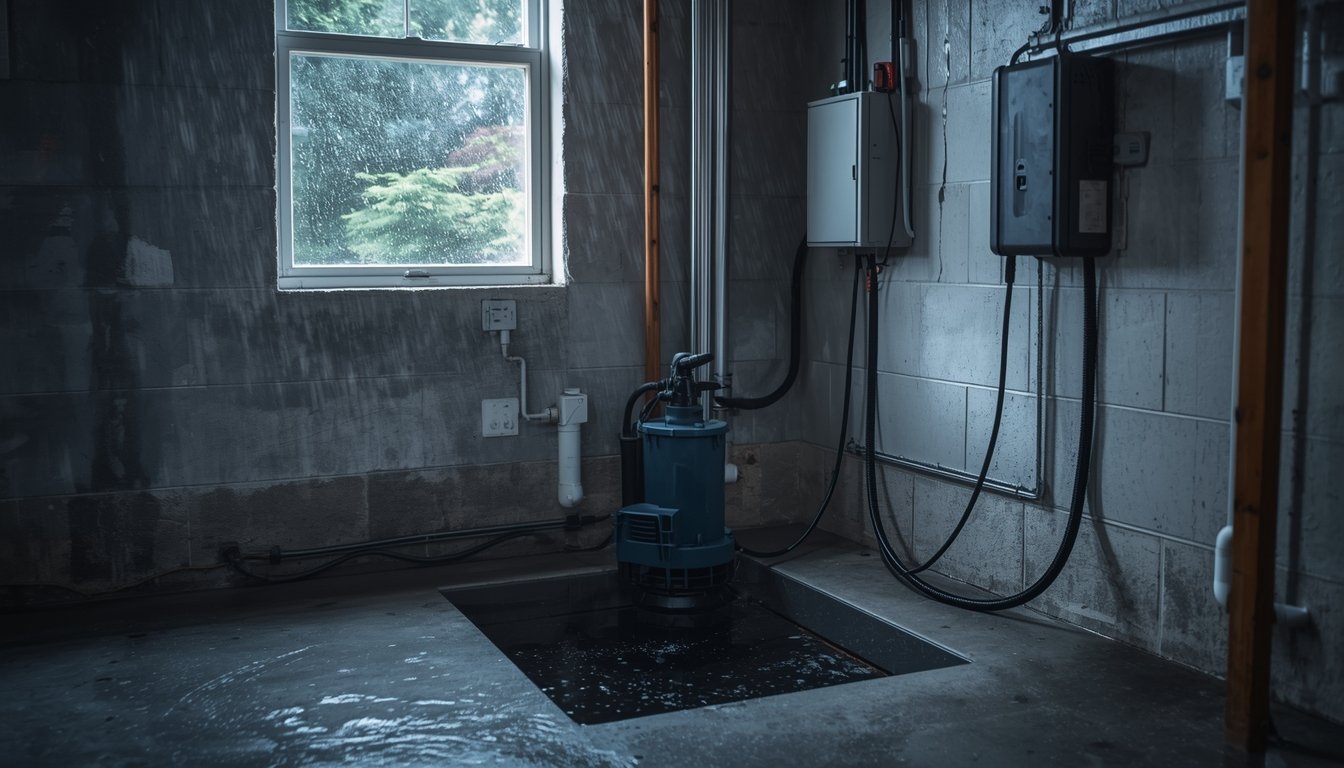
A sump pump battery backup may run for a few hours or much longer, depending on the battery size, pump power draw, and how often the pump cycles during the outage. The same battery can last many hours in a dry basement with occasional pumping, but drain much faster during heavy rain when the pump runs repeatedly.
The most important factor is not time alone. Runtime depends on how much water enters the sump pit while the power is out.
How It Works
A sump pump backup system uses stored battery energy to run a backup pump or power a compatible existing pump through an inverter. The battery only drains heavily when the pump is actually running.
This means runtime is affected by pump cycling. A pump that runs for 30 seconds every 10 minutes uses far less battery than a pump running almost continuously during a storm.
Battery capacity is usually measured in amp-hours or watt-hours, but those numbers do not translate into a fixed runtime for every home. The pump’s electrical demand, startup surge, discharge height, battery condition, and water inflow all affect the result. For sizing the system itself, see Battery Backup for Sump Pump: What Size Do You Need?.
What It Can Do
A properly matched backup system can keep water moving when the main power is out. It is most useful when the outage and water inflow are within the battery and pump system’s limits.
- Keep a backup sump pump running during short to moderate outages
- Help protect a basement when the primary pump loses power
- Provide extra time during storms until grid power returns
- Support a compatible inverter backup system for an existing AC pump
The practical value is extra protection, not unlimited pumping. A backup system can reduce flood risk when the main pump cannot run, but it still depends on battery capacity, pump demand, and water volume. If the sump pit fills quickly, even a good backup system may drain faster than expected. Testing the system before storm season is important because battery age and pump condition can reduce real-world performance.
Limitations and What It Cannot Do
A sump pump battery backup cannot run forever. Once the stored energy is used, the pump stops unless the battery is recharged or power returns.
It also cannot overcome a pump that is too small for the water entering the pit. If heavy rain overwhelms the pump, a battery will not solve the underlying capacity problem.
Another limitation is battery health. An older battery may show a full charge but provide less usable runtime than it did when new. Poor connections, incorrect battery type, a failing charger, or a stuck float switch can also reduce protection.
When It Works Best
Battery backup works best when the sump pump only cycles periodically and the outage is short to moderate. These conditions allow the battery to rest between pump cycles and stretch available runtime.
It also works best when the primary drainage setup is already healthy. The sump pit, pump, discharge line, check valve, and float switch should all work properly before relying on backup power.
Homes with finished basements, stored valuables, or frequent storm outages may need more backup margin. That can mean a larger compatible battery, a higher-capacity backup pump, a second backup method, or a water alarm to warn when the system is struggling.
Common Misconceptions
One common misconception is that a 100Ah battery always gives the same runtime. In reality, runtime changes with pump cycling, water inflow, discharge height, and battery condition.
Another misconception is that a battery backup replaces the need for a reliable primary sump pump. The backup is there for outages or pump failure, but the main system still needs to handle normal water removal.
It is also wrong to assume that more battery capacity fixes every basement. If the pump is undersized, the discharge line is restricted, or water enters too quickly, the whole sump system may need improvement.
Final Answer Summary
A sump pump battery backup can run for hours, but the exact runtime depends on battery capacity, pump draw, cycling frequency, and storm conditions. Light water inflow may allow long backup time, while heavy rain can drain the same battery much faster.
The safest answer is to size the battery backup for your actual sump pit conditions, not ideal estimates. A tested system with enough battery margin gives better protection than a system chosen only by advertised runtime.