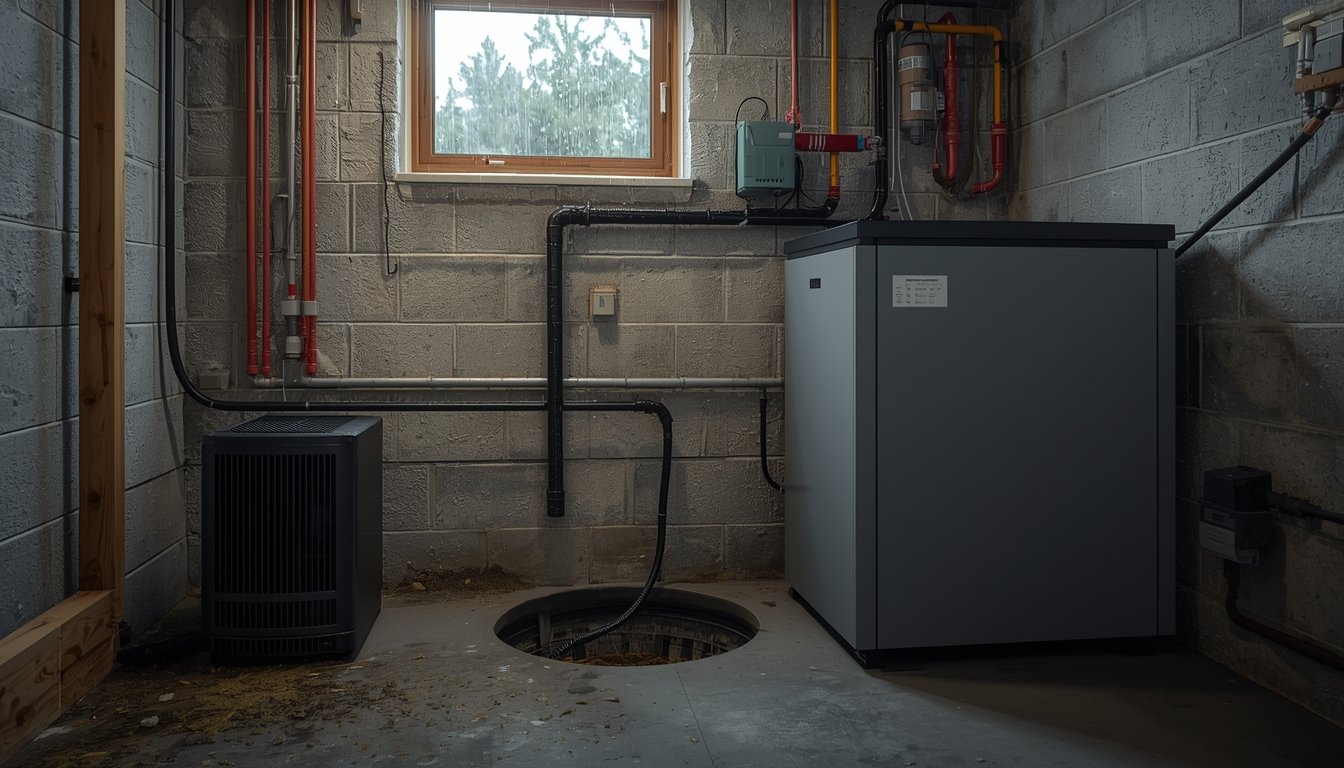
A standard computer UPS usually does not work well for a sump pump. Most sump pumps have motor startup surge, high running demand, and long outage requirements that are beyond what a small office UPS is designed to handle.
A sump pump may work with a properly rated inverter backup system or appliance-capable battery system, but it must be sized for the pump’s real electrical load. The safest answer is that a normal UPS should not be assumed to protect a basement during a storm outage.
How It Works
A UPS stores battery power and switches to that battery when grid power fails. This works well for computers, routers, modems, and other low-draw electronics that need short-term backup.
A sump pump is different because it uses a motor. When the pump starts, it may briefly need more power than it uses while running. This startup surge can overload a small UPS even if the pump’s normal running watts look acceptable.
Runtime is another issue. A UPS designed for office equipment may only provide minutes of backup under a heavy load. A sump pump backup may need to operate through repeated cycles during rain, which requires more stored energy and a system designed for motor loads. For a more suitable setup, a battery backup inverter for sump pump is usually more relevant than a basic computer UPS.
What It Can Do
A UPS can help in a few limited situations, but only when its rating, battery capacity, and output type match the pump. It should not be treated as a universal sump pump backup solution.
- Provide very short backup time for a small compatible pump
- Bridge a brief power flicker if the pump load is within rating
- Protect low-power control equipment in some setups
- Support electronics such as alarms, sensors, routers, or monitoring devices
The most realistic use for a UPS near a sump system is supporting low-power electronics, not running the pump itself for a long outage. A water alarm, modem, router, or monitoring device may be a better match for a standard UPS than the pump motor. If the goal is actual water removal during a power outage, the backup system needs enough surge capacity, inverter output, and battery storage to run the pump repeatedly.
Limitations and What It Cannot Do
A normal UPS cannot guarantee sump pump protection during heavy rain. If the pump starts frequently, the battery can drain quickly, even if the UPS is able to start the pump at first.
It also cannot fix an undersized sump pump, blocked discharge line, stuck float switch, or high water inflow problem. Backup power only helps if the pump and drainage system are already capable of moving the water.
Another limitation is waveform and motor compatibility. Some UPS units use output that may not be suitable for motor loads. If the UPS is not designed for this type of equipment, the pump may fail to start, run poorly, trip the UPS, or shorten the life of the backup equipment.
When It Works Best
A UPS works best for predictable, low-power electronics. In a sump pump setup, that usually means alarms, monitoring devices, communication equipment, or smart home hardware rather than the pump motor itself.
For the pump, a dedicated battery backup sump pump, inverter backup system, or properly matched deep cycle battery setup is usually a better fit. These systems are built around pump operation, automatic switching, battery charging, and repeated cycling during outages.
A UPS may only be reasonable for a sump pump if the manufacturer clearly supports motor loads, the surge rating is high enough, the battery capacity is adequate, and the pump’s electrical demand is within the system limits. Even then, it should be tested before relying on it during a storm.
Common Misconceptions
One common misconception is that any backup battery with outlets can run a sump pump. In reality, a sump pump motor is a more demanding load than a computer, router, or lamp.
Another misconception is that a UPS runtime estimate applies directly to sump pumps. Runtime depends on pump cycling, water inflow, battery health, and how hard the pump works during heavy rain.
It is also misleading to assume that a larger UPS automatically solves the problem. The system still needs proper surge handling, motor compatibility, safe battery capacity, and correct installation.
Final Answer Summary
A standard UPS usually does not work well as a sump pump backup. It may handle low-power electronics or very short interruptions, but most sump pumps need a backup system designed for motor startup surge and repeated pumping cycles.
For real basement flood protection, use a dedicated battery backup sump pump or a properly rated inverter backup system. The backup should match the pump’s electrical load, water inflow, and expected outage length.