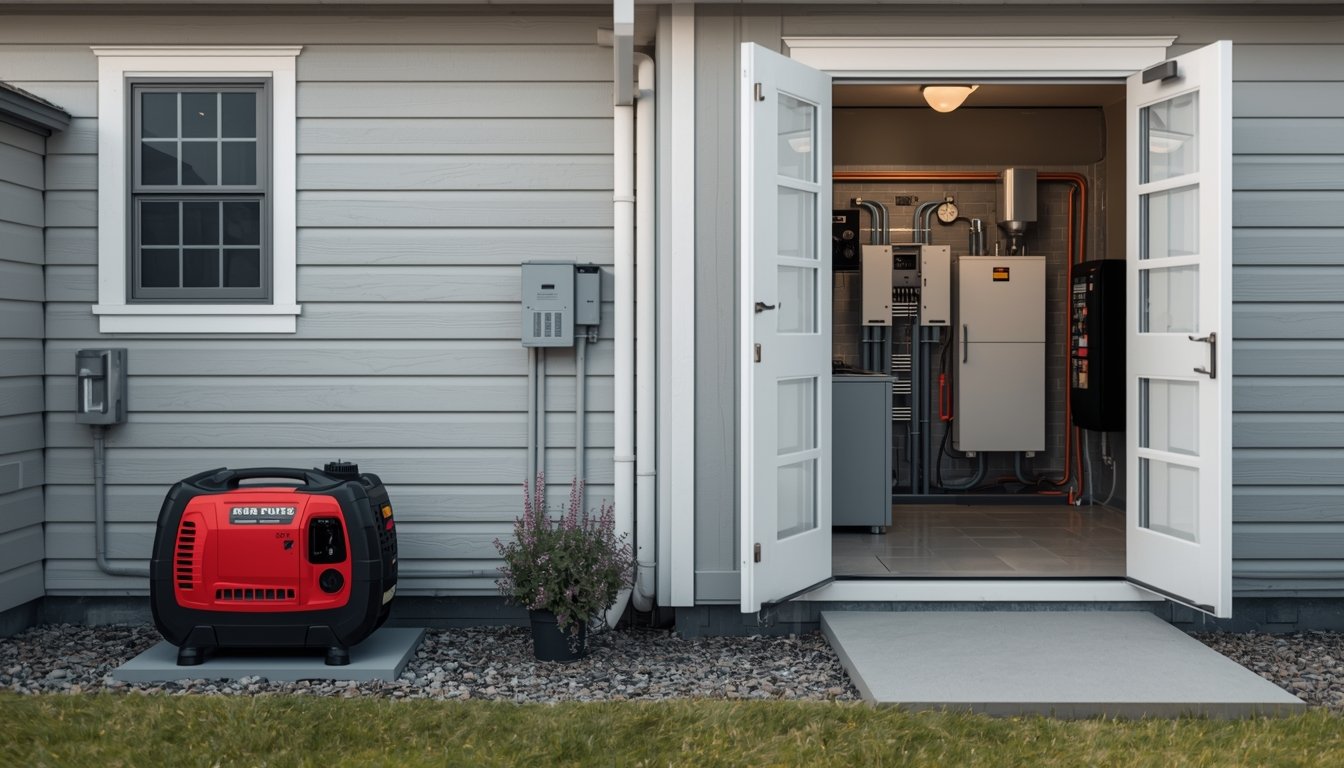
Portable generators produce carbon monoxide (CO), a dangerous and potentially lethal gas. CO is colorless and odorless, making it impossible to detect without specialized equipment. To prevent serious injury or death, always use portable generators outside and far from windows, doors, or vents, and understand the key safety measures required to avoid carbon monoxide poisoning.
How It Works
Portable generators burn fuels such as gasoline, propane, or diesel to create electricity. During this process, the engine emits exhaust that contains carbon monoxide as a byproduct of incomplete combustion. CO is heavier than air and can collect in enclosed or partially enclosed spaces, even if doors or windows are open. Because humans cannot sense CO, accidental poisoning can occur quickly and without warning, particularly when generators are used indoors or too close to buildings.
What It Can Do
Following strict carbon monoxide safety practices with portable generators can significantly reduce the risk of exposure. Safe generator usage aims to prevent CO buildup and protect households from invisible danger. There are essential steps every user should take to ensure maximum safety:
- Allow only outdoor operation of portable generators, at least 20 feet from occupied spaces.
- Never run generators inside homes, garages, basements, crawl spaces, sheds, or enclosed patios—even if doors or windows are open.
- Install battery-operated or plug-in CO detectors with battery backup on every level of your home.
- Position exhaust outlets away from windows, doors, or air intakes, and avoid using generators near overhangs or covered walkways.
Implementing these practices can help protect you and others from accidental carbon monoxide poisoning. It is important to understand that CO is not only a risk to those in the immediate area, but can also endanger people in adjacent rooms or buildings if fumes are drawn inside. Adopting the recommended safety steps is a proactive way to reduce the likelihood of CO-related incidents and should always be part of any generator usage plan.
Limitations and What It Cannot Do
Even with safety precautions, generators remain a potential CO hazard if not used correctly. Safeguards such as outdoor placement and CO alarms reduce risks but cannot eliminate them entirely, especially if instructions are ignored or if CO monitors are disabled or malfunctioning. Portable generators cannot self-detect hazardous gas concentrations or automatically shut down in unsafe conditions unless equipped with advanced built-in sensors. Most models lack these features.
It is also important to note that standard household ventilation (such as open doors or fans) is not sufficient to disperse CO and does not make indoor operation safe. No generator brand or type produces “safe” exhaust suitable for indoor use. Always follow approved guidelines and refer to trustworthy safety resources, such as the Generator Safety Checklist for New Owners, for comprehensive best practices. Prioritizing safe operation is the user’s responsibility at all times.
When It Works Best
CO safety measures are most effective when the generator is positioned outdoors—never within 20 feet of dwellings or frequented areas. Safety is further enhanced when users install working CO detectors throughout the home and regularly test them to confirm function. These precautions are particularly important during power outages, storms, or emergencies, when improper generator placement is more likely. The combination of correct generator location and active CO monitoring offers the strongest protection against accidental exposure.
Common Misconceptions
Some users believe that opening windows or operating generators in partially enclosed spaces is safe, but these actions do not prevent CO buildup.
Another misconception is that smaller generators are harmless; in reality, even compact units can produce deadly amounts of carbon monoxide in minutes.
CO warning signs—like symptoms of headache or dizziness—do not appear soon enough to provide reliable protection. Prevention, not detection by symptoms, is essential for safety.
Final Answer Summary
Portable generator carbon monoxide safety relies on outdoor-only operation, proper placement away from living areas, and the use of CO alarms. Careful attention to these steps is critical, as CO is undetectable without equipment and can be fatal within minutes. Relying on correct procedures, instead of assumptions or myths, is the best way to prevent CO poisoning incidents during generator use.