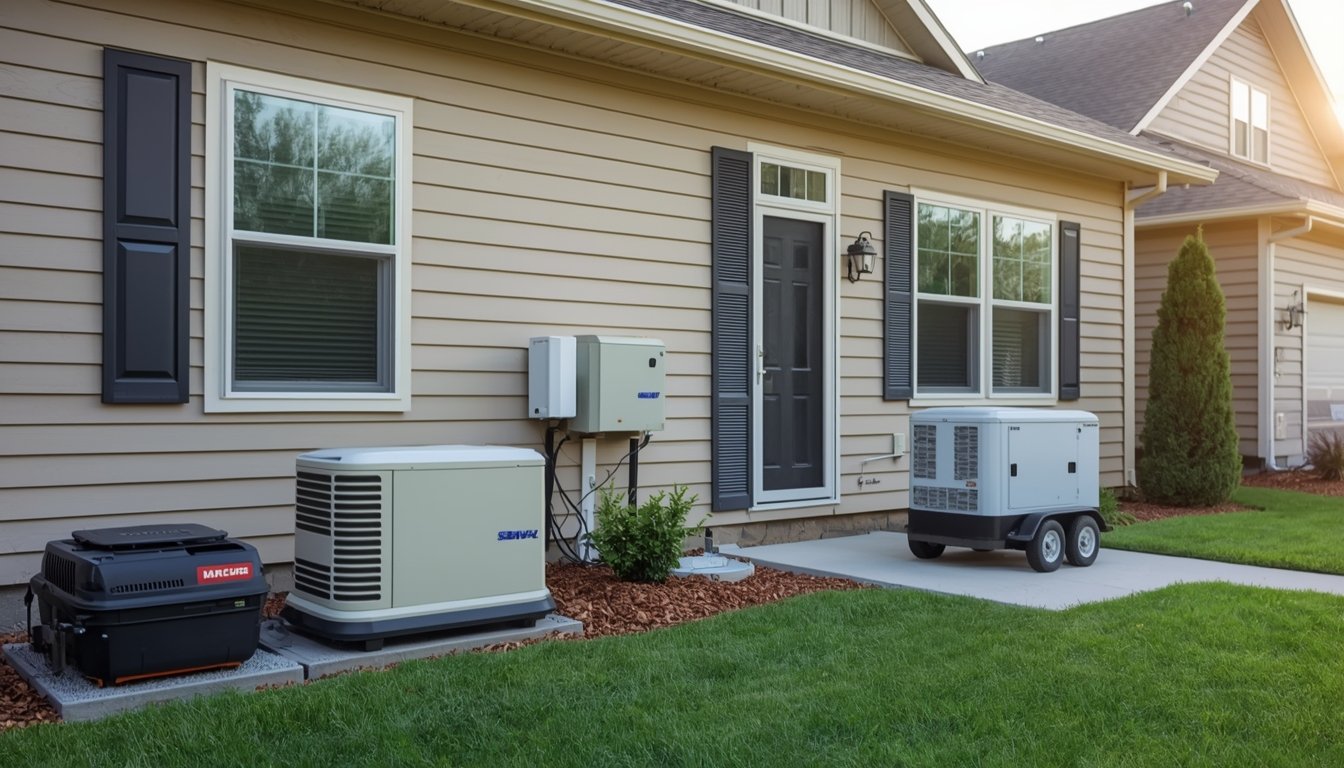
Standby generators need scheduled maintenance every year, plus periodic checks after runs or outages to stay reliable. Typical models require a professional service at least once annually and routine owner inspections every month. Skipping maintenance can void warranties or leave the generator unable to start when you need it most.
Routine Tasks and Maintenance Schedule
Monthly, you should visually inspect your standby generator for leaks, corrosion, or animal nests. Run the unit’s self-test cycle (exercise mode) and listen for odd noises or warning lights. Every six months, clean around the generator to keep debris away from vents and check the battery condition if it’s accessible. Once a year, a professional service will be needed—this includes changing the oil, air filter, spark plugs, and fuel filter, as well as testing load transfer and safety shutdown systems. During periods of frequent usage, such as after multiple power outages, it’s wise to check the oil level and air filter as often as weekly. Following these basic routines ensures the generator will start automatically and supply full backup power when the next outage strikes. Missing regular checks can lead to undetected issues that compromise performance or even cause major breakdowns at the worst possible time.
Key Maintenance Actions (Bullet Points)
- Change oil and oil filter according to the manufacturer’s schedule
- Inspect and replace air filter annually or as needed
- Check battery voltage and clean battery terminals
- Visually inspect for leaks, rodents, and physical damage every month
- Test the automatic transfer switch and exercise functionality
Each action above supports the health of your generator. Oil changes prevent engine wear, while air filter replacements help the engine breathe cleanly. Clean, charged batteries make sure the generator starts on demand. Monthly visual checks can catch small issues before they become serious. Regular testing of the transfer switch confirms your backup system will work when the utility grid fails. Sticking to these actions helps keep your investment running efficiently, reduces emergency repair costs, and ensures you always have reliable backup power at home.
Signs Your Generator Needs Immediate Attention
There are several warning signs that suggest your standby generator needs prompt servicing. If you notice your generator fails its weekly exercise cycle, struggles to start, or generates unfamiliar error codes, do not ignore these problems. Excessive exhaust smoke, unusual noises, or persistent vibrations can indicate mechanical issues or fuel delivery problems. Damp spots or oil pools beneath the housing often mean leaks that can damage internal parts if left unchecked. A battery that will not hold charge or corroded terminals might leave your backup system unresponsive in an outage. If scheduled maintenance is overdue or you’re experiencing repeated outages, extra inspections are wise. In any of these cases, contact a qualified technician quickly. Taking action early prevents expensive repairs and keeps your generator ready during emergencies. For a list of top-rated systems with low maintenance needs, see our guide to Best Standby Generators for Home Backup.