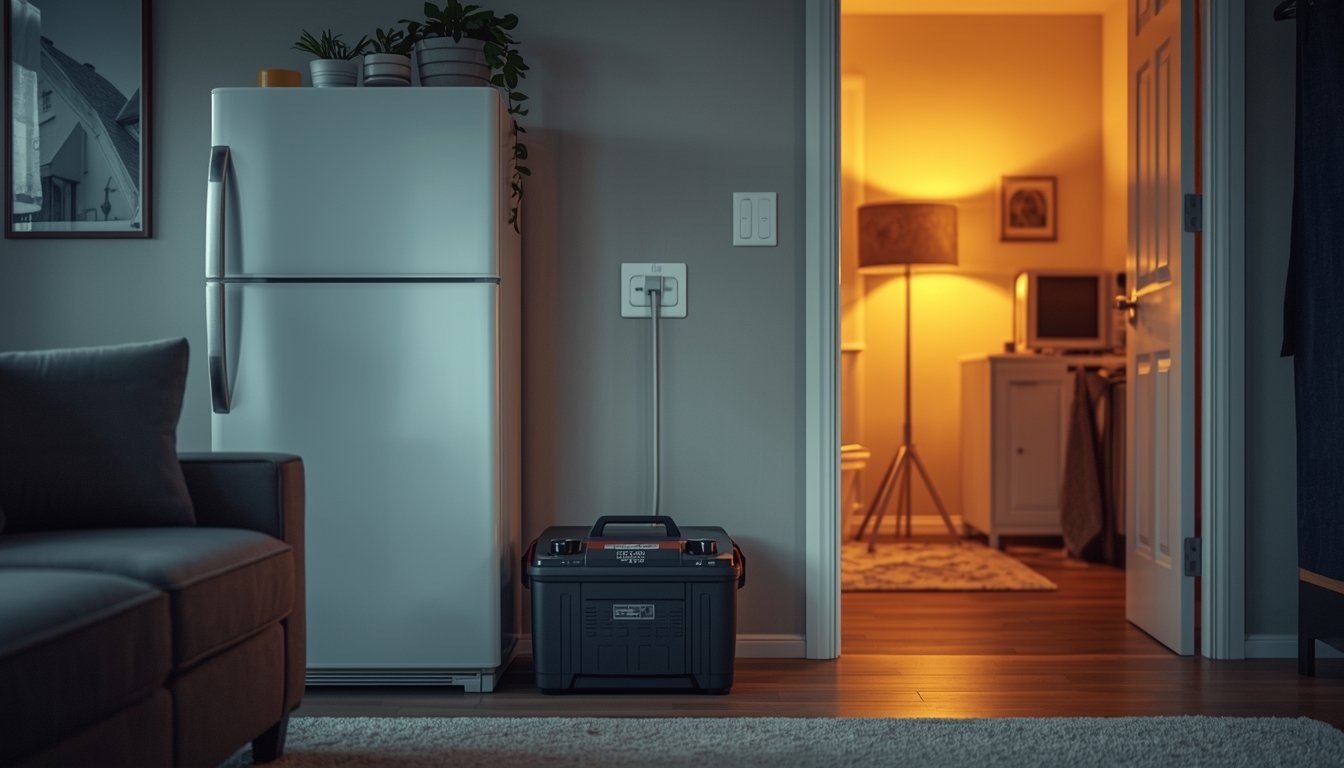
This glossary explains the most common terms used when comparing home backup power systems, generators, batteries, solar backup, and outage preparation. It is designed to help homeowners understand the language used in backup power guides, product descriptions, installer quotes, and system specifications.
Basic Backup Power Terms
- Home backup power system: A setup designed to provide electricity to part or all of a home during a power outage. It may use a standby generator, portable generator, battery backup system, solar battery system, or a combination of equipment.
- Outage: A loss of utility power to the home. Outages may last a few minutes, several hours, or multiple days depending on the cause and local grid conditions.
- Essential load: An appliance, device, or circuit that a homeowner wants to keep running during an outage. Common essential loads include refrigerators, freezers, lights, internet equipment, sump pumps, well pumps, and medical devices.
- Whole-house backup: A backup power setup designed to support most or all of the home’s electrical demand. This usually requires a larger generator, larger battery system, or carefully designed hybrid system.
- Partial-home backup: A backup system that powers only selected appliances or circuits instead of the entire home. This is often more affordable and easier to size than whole-house backup.
- Load management: The process of controlling which appliances or circuits receive power during an outage so the backup system is not overloaded.
- Runtime: The amount of time a backup power source can continue supplying power before it runs out of stored energy, fuel, or usable capacity.
Generator Terms
- Standby generator: A permanently installed generator that sits outside the home and can automatically supply power during an outage when connected through the proper transfer equipment.
- Portable generator: A movable generator that can provide temporary backup power. Portable generators must be used outdoors and positioned safely away from windows, doors, vents, garages, and enclosed spaces.
- Inverter generator: A type of portable generator that produces cleaner, more stable power than many conventional portable generators. Inverter generators are often used for sensitive electronics, smaller loads, and quieter operation.
- Running watts: The amount of power an appliance or device needs to keep operating after it has started.
- Starting watts: The extra power some appliances need for a short time when they first turn on. Refrigerators, air conditioners, sump pumps, and well pumps may need more starting watts than running watts.
- Surge watts: Another term for short-term starting power. A generator or battery system may advertise both continuous output and surge output.
- Transfer switch: A device that safely connects a generator or backup power source to selected home circuits while preventing unsafe backfeeding into utility lines.
- Automatic transfer switch: A transfer switch that can detect a power outage and switch the home to backup power automatically when used with a compatible standby generator or backup system.
- Manual transfer switch: A transfer switch that requires the homeowner to manually switch selected circuits from utility power to generator power during an outage.
- Backfeeding: An unsafe condition where generator power flows backward into home wiring or utility lines without proper transfer equipment. This can create serious risks for utility workers, equipment, and the home.
- Total harmonic distortion: A measure of how much distortion is present in an electrical output. Lower total harmonic distortion is generally better for sensitive electronics.
Battery and Solar Terms
- Battery backup: A backup power system that stores electricity in batteries and supplies power during an outage. Battery backup systems may be portable or permanently installed.
- Home battery: A larger battery system designed to support home circuits or whole-home backup when paired with the right inverter and electrical setup.
- Portable power station: A rechargeable battery unit with outlets that can power small appliances, electronics, and selected emergency devices. It is usually safer for indoor use than a fuel-burning generator because it does not produce exhaust.
- Solar generator: A common marketing term for a portable power station that can be recharged by solar panels. It is not a fuel-burning generator.
- Solar battery: A battery system that stores electricity from solar panels for later use. During an outage, solar panels usually need compatible battery and inverter equipment to continue powering the home.
- Kilowatt: A unit of power equal to 1,000 watts. It describes how much electricity a device uses or how much power a system can provide at a given moment.
- Kilowatt-hour: A unit of energy equal to using 1,000 watts for one hour. Battery capacity and household energy use are often measured in kilowatt-hours.
- Usable capacity: The amount of stored battery energy that can actually be used. Usable capacity may be lower than the total battery capacity because some energy is reserved to protect the battery.
- Depth of discharge: The percentage of a battery’s capacity that has been used. Deeper discharges may affect battery lifespan depending on the battery chemistry and system design.
- Cycle life: The number of charge and discharge cycles a battery is expected to complete before its capacity drops below a defined level.
- LiFePO4: A lithium iron phosphate battery chemistry often used in backup batteries and portable power stations. It is commonly valued for cycle life, stability, and durability.
- NMC: A lithium nickel manganese cobalt battery chemistry used in some battery systems. It can offer high energy density but has different lifespan and thermal characteristics from LiFePO4.
- Inverter: A device that converts stored DC battery power into AC power that household appliances can use.
- Pure sine wave: A smooth AC power output similar to utility power. Pure sine wave output is usually preferred for sensitive electronics, medical devices, motors, and appliances.
- Modified sine wave: A less refined AC power output that may work with some simple devices but can cause problems with sensitive electronics, motors, chargers, or appliances.
Fuel and Runtime Terms
- Natural gas generator: A generator connected to a home’s natural gas supply. It can run as long as the gas supply remains available and the system is correctly sized and installed.
- Propane generator: A generator that runs on propane stored in a tank. Runtime depends on generator size, load, fuel consumption, and propane tank capacity.
- Gasoline generator: A portable generator powered by gasoline. It can be useful for temporary backup but requires safe outdoor operation and proper fuel storage.
- Dual-fuel generator: A generator that can run on two fuel types, commonly gasoline and propane.
- Tri-fuel generator: A generator that can run on three fuel types, commonly gasoline, propane, and natural gas.
- Fuel consumption: The amount of fuel a generator uses over time. Fuel consumption changes based on generator size, electrical load, fuel type, and operating conditions.
- Load percentage: The portion of a generator’s capacity being used. A generator running at a lower load usually consumes less fuel than one running near full capacity.
- Propane tank sizing: The process of matching propane storage capacity to generator fuel consumption and expected outage duration.
- Natural gas meter capacity: The ability of a home’s gas meter and gas line to supply enough fuel for a standby generator and other gas appliances.
Installation and Safety Terms
- Permit: Local approval that may be required before installing certain backup power equipment, especially standby generators, transfer switches, fuel connections, and permanent battery systems.
- Electrical inspection: A review by a qualified inspector to confirm that electrical work meets applicable safety requirements and local rules.
- Generator placement: The location where a generator is installed or operated. Safe placement is especially important for exhaust, ventilation, clearance, service access, and carbon monoxide risk.
- Carbon monoxide: A dangerous gas produced by fuel-burning equipment such as portable generators and standby generators. It cannot be seen or smelled, which is why safe outdoor placement and carbon monoxide alarms are important.
- Setback: The required distance between equipment and nearby structures, openings, property lines, meters, or other objects. Setback requirements may vary by manufacturer, code, and local authority.
- Concrete pad: A stable base often used for standby generator installation. Some systems use a preformed pad or other approved base instead.
- Interlock kit: A device used with some electrical panels to help prevent unsafe generator backfeeding. It must be compatible with the panel and installed correctly.
- Dedicated circuit: An electrical circuit assigned to a specific appliance or purpose, such as a sump pump, well pump, refrigerator, or furnace.
- Critical loads panel: A separate electrical panel that contains only the circuits intended to receive backup power during an outage.
Final Summary
Understanding backup power terms makes it easier to compare generators, batteries, solar backup systems, installation quotes, and product specifications. The most important terms to understand first are essential load, running watts, surge watts, transfer switch, kilowatt-hour, usable capacity, runtime, and generator placement.