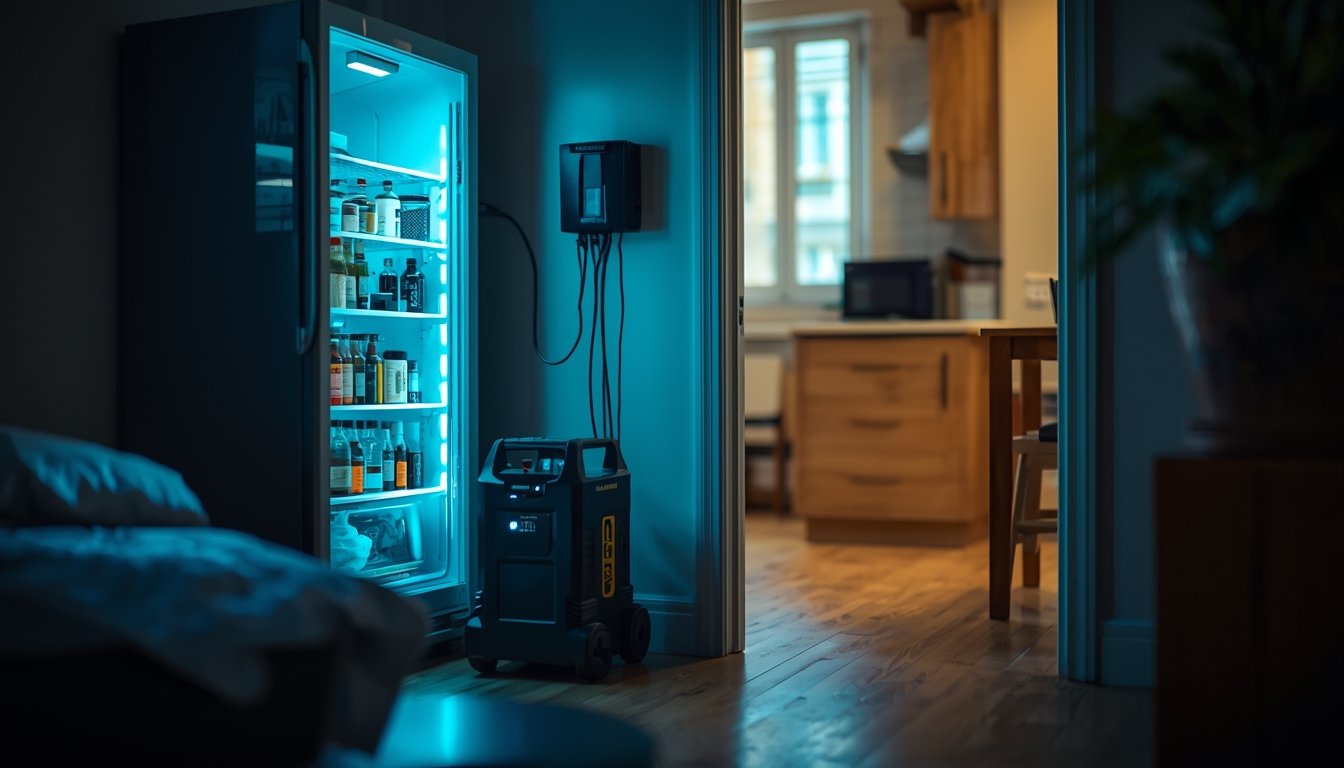
Home backup power systems provide electricity to a house during power outages by automatically or manually supplying energy from stored or alternative sources. These systems are designed to keep essential appliances and devices running when utility power is unavailable. They work by switching the home’s electrical circuits from the main grid to a backup power source when an outage is detected.
How It Works
Home backup power systems operate using either generators or batteries. When the main power supply is interrupted, transfer switches are triggered to reroute electrical flow. Generators typically use fuels like natural gas, propane, or diesel to create electricity on demand. Battery-based systems rely on pre-stored electrical energy, often charged by solar panels or the grid itself.
The system detects outages through automatic sensors. Once activated, it powers designated home circuits, such as refrigeration, heating, lighting, or medical equipment. Transfer switches prevent energy from flowing back into the grid, ensuring safety for utility workers. After utility power returns, the system switches back, and backup sources turn off or recharge as needed.
What It Can Do
Home backup power systems are designed to meet critical household energy needs during an outage. They differ in capacity and features based on the system type and installation choices. Some functions are common to most backup power systems, although their performance will depend on the available power source and configuration.
- Run essential appliances, such as refrigerators, freezers, and lights.
- Support medical devices that require continuous power.
- Operate sump pumps, security systems, and communication devices.
- Allow charging of mobile phones and laptops.
- Provide temporary heating or cooling if sized accordingly.
While these systems are highly useful for keeping a home functional during grid outages, their capacity is not unlimited. Most systems are sized for partial home backup, which means users must choose what will be powered in advance. Larger systems or whole-house generators can support additional appliances but require greater investment and planning.
Limitations and What It Cannot Do
Despite their value during outages, home backup power systems have specific limits. Knowing these helps set realistic expectations and avoid reliance beyond the system’s capabilities.
- Cannot supply unlimited power for all household devices at once.
- Most cannot run large heating or air conditioning units for extended periods unless specifically sized for that demand.
- Battery systems offer limited run time, often several hours to a day, depending on usage and capacity.
- Generators depend on available fuel and may need manual refueling in longer outages.
- Not all systems automatically switch over; some require manual activation.
Backup systems also require regular maintenance and testing to ensure reliability. Environmental factors, installation quality, and system age can also affect performance. Users should remember that backup systems are meant for temporary emergencies and not as a permanent replacement for grid power. Choosing the right configuration and understanding system constraints is essential for safe and effective use.
When It Works Best
Home backup power systems are most effective during planned or unexpected utility outages caused by severe weather, grid failures, or maintenance disruptions. They work best when properly sized for the home’s critical needs and installed by professionals. Homes in regions prone to storms, wildfires, or unreliable grid conditions benefit most from these systems. Systems perform optimally when users regularly maintain equipment, test operation before emergencies, and monitor fuel or battery levels. Understanding typical household loads and prioritizing essential devices also helps ensure effective use during each outage event.
Common Misconceptions
Many believe that all backup systems power an entire home without interruption, but most are designed for selected circuits. Another misconception is that battery systems last indefinitely, when actual runtimes are limited by stored capacity and usage choices. Some users think any generator can be used safely; however, only those with proper transfer switches and installation should be relied upon to prevent backfeeding and hazards.
Final Answer Summary
Home backup power systems maintain electricity during outages by automatically or manually providing power from generators or batteries. They are valuable for running selected appliances and maintaining essential services, but users must be aware of system limitations and realistic performance. For more details on types, features, and setup, see the Home Backup Power Systems Guide.