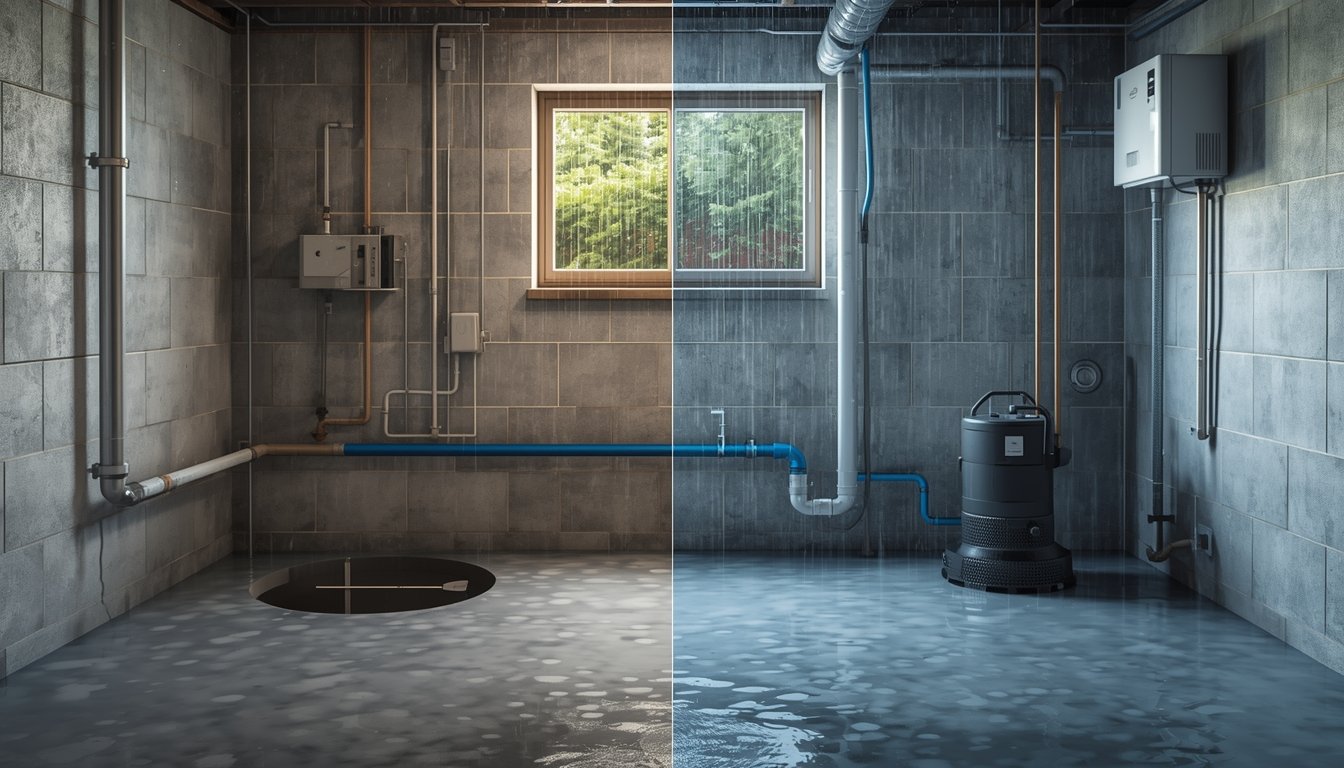
Battery backup is usually the better choice for most homeowners who want straightforward sump pump protection during a power outage, while a water-powered backup sump pump can be useful in homes with reliable municipal water pressure and suitable plumbing. The main difference is that a battery backup relies on stored electrical energy, while a water-powered backup relies on pressurised water to help remove sump water.
The right choice depends on your home’s water supply, sump pit layout, outage risk, plumbing setup, and how much water enters the basement during storms. This comparison explains the category difference first, then highlights approved battery backup products that fit the Power Backup HQ product set.
Quick Picks
- Best overall battery backup choice: The Basement Watchdog Big Combo CONNECT Preassembled Primary & Battery Backup Sump Pump System, because it suits buyers who want a complete primary-and-backup setup.
- Best for an existing sump pump: WAYNE ESP25 / ESP25N Battery Backup Sump Pump, because it gives homeowners a dedicated backup pump without replacing the whole system.
- Best inverter-style battery backup: Pump Sentry 822PS Sump Pump Backup System, because it is designed to power a compatible existing AC sump pump during outages.
- Best supporting battery option: Renogy Deep Cycle AGM 12 Volt 100Ah Battery, because it can support compatible backup systems that require a separate battery.
The Basement Watchdog Big Combo CONNECT Preassembled Primary & Battery Backup Sump Pump System

A complete primary and battery backup sump pump system for homeowners who want a full battery-based setup. Check current price
The Basement Watchdog Big Combo CONNECT Preassembled Primary & Battery Backup Sump Pump System is the strongest fit for homeowners who want a complete battery backup route rather than a water-powered system. It suits homes where the buyer wants a primary pump and backup pump planned together.
Best for: Homeowners who want a full battery-based sump pump setup with primary and backup protection.
Main advantage: It gives buyers a more complete system path without relying on municipal water pressure.
Main limitation: Runtime still depends on battery capacity, pump cycling, water inflow, installation quality, and battery condition.
WAYNE ESP25 / ESP25N Battery Backup Sump Pump

An add-on battery backup sump pump for homes with an existing primary sump pump. Check current price
The WAYNE ESP25 / ESP25N Battery Backup Sump Pump is the better fit if your current primary sump pump is still working and you mainly need a backup pump for outages. Compared with a water-powered backup system, this route does not depend on city water pressure or plumbing into the water supply.
Best for: Homeowners who want to add a dedicated battery backup pump to an existing sump pit.
Main advantage: It gives you a second pumping path during outages without replacing the whole sump pump system.
Main limitation: It still needs proper battery support, float switch placement, sump pit space, and discharge planning.
Pump Sentry 822PS Sump Pump Backup System

An inverter-style battery backup system for powering a compatible existing AC sump pump during outages. Check current price
The Pump Sentry 822PS Sump Pump Backup System is a different battery-based path because it focuses on powering a compatible existing AC sump pump. It may appeal to homeowners who do not want to add a second pump or install a water-powered backup system.
Best for: Homeowners who want inverter-style backup power for a compatible existing sump pump.
Main advantage: It can let the current pump keep operating during a power outage when the system is matched correctly.
Main limitation: Compatibility is critical, including pump startup demand, running load, battery capacity, and installation setup.
Renogy Deep Cycle AGM 12 Volt 100Ah Battery

A deep cycle AGM battery option for compatible battery backup sump pump systems. Check current price
The Renogy Deep Cycle AGM 12 Volt 100Ah Battery is not a sump pump or a water-powered backup system. It is a supporting battery component for compatible battery backup systems that require separate stored energy.
Best for: Buyers who need a compatible battery for a backup sump pump or inverter-style setup.
Main advantage: It provides stored energy for compatible sump pump backup equipment.
Main limitation: It does not move water by itself and must be matched to compatible backup equipment, charger requirements, and battery enclosure needs.
Comparison Summary
- Choose battery backup if you want a widely used, product-based sump pump backup option that does not depend on municipal water pressure.
- Consider water-powered backup if your home has reliable city water, suitable plumbing, and no conflict with local rules or water-use concerns.
- Avoid water-powered backup if your home uses a well, because a power outage can also stop the well pump.
- Battery backup needs battery maintenance because runtime depends on charge level, battery age, and pump cycling.
- Water-powered backup needs plumbing suitability because it requires a safe and approved water supply connection.
- High-risk basements may need more than one layer such as a primary pump, backup pump, alarm, and drainage improvements.
Final Verdict
For most homeowners, a battery backup sump pump is the more practical first choice because it is widely available, does not depend on municipal water pressure, and can be matched to common sump pump backup products. The The Basement Watchdog Big Combo CONNECT Preassembled Primary & Battery Backup Sump Pump System is the strongest fit if you want a complete battery-based system.
The WAYNE ESP25 / ESP25N Battery Backup Sump Pump is better if you already have a working primary pump and want a dedicated backup pump. The Pump Sentry 822PS Sump Pump Backup System is better if your existing AC pump is compatible with an inverter-style backup setup.
A water-powered backup sump pump can make sense in the right home, but it is not universal. Avoid it if you use well water, if local plumbing rules are a concern, or if water pressure and supply reliability are uncertain.