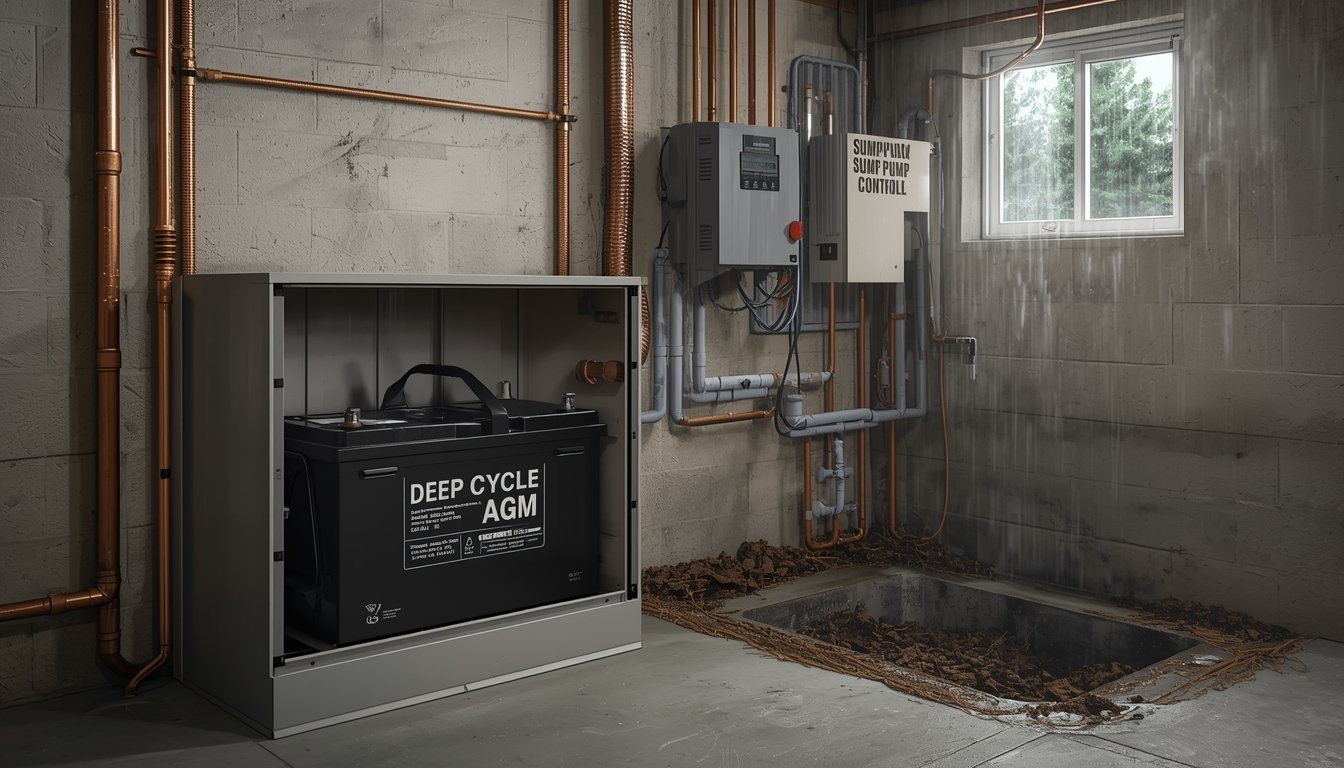
A deep cycle battery for sump pump backup should be chosen by battery type, amp-hour capacity, charger compatibility, and the backup system’s requirements. For many residential backup systems, a 12V deep cycle battery in the 75Ah to 100Ah range is a practical starting point, but the right size depends on pump runtime, water inflow, and how often outages happen.
The battery is only one part of the backup setup. It must match the pump, controller, inverter, charger, enclosure, and outage plan.
What a Deep Cycle Battery Does
A deep cycle battery stores energy so a sump pump backup system can keep working when grid power fails. Unlike a standard car battery, a deep cycle battery is designed to provide sustained power over time rather than one short burst for engine starting.
In a sump pump backup setup, the battery may power a dedicated DC backup pump or support an inverter system that runs a compatible AC sump pump. The correct battery depends on the backup equipment, not just the size of the basement or the pump pit.
This is why battery choice should come after system choice. A homeowner choosing a full backup pump system, an inverter system, or a replacement battery may need different specifications. For sizing the overall setup, it helps to read Battery Backup for Sump Pump: What Size Do You Need? before choosing the battery itself.
Battery Types to Consider
- AGM batteries are sealed and commonly used in backup sump pump systems.
- Flooded lead-acid batteries may require more maintenance and ventilation.
- Gel batteries may suit some systems but must match charger requirements.
- Lithium batteries should only be used if the backup system specifically supports them.
AGM batteries are often attractive for homeowners because they are sealed, lower-maintenance, and easier to manage than traditional flooded batteries. However, the safest choice is always the battery type recommended by the sump pump backup manufacturer. A battery can have the right voltage and still be wrong for the charger, controller, or enclosure. Using an unsupported battery type can reduce performance, shorten battery life, or create charging problems. Compatibility matters more than choosing the newest or most expensive battery chemistry.
How Much Capacity You Need
Battery capacity is usually shown in amp-hours, often written as Ah. A higher Ah rating generally means more stored energy, but it does not translate into a fixed number of protection hours in every basement.
A 100Ah battery may provide useful backup time where the sump pump cycles occasionally. In a basement with heavy water inflow, the same battery may drain much faster because the pump has to run more often.
The pump’s power draw also matters. A small backup pump that runs briefly will use less energy than a larger pump or inverter-powered AC pump running repeatedly during heavy rain.
Battery age, temperature, discharge limits, and charger design can also affect usable capacity. A battery that looks large enough on paper may deliver less runtime if it is old, poorly charged, or mismatched to the backup system.
Compatibility and Safety Checks
- Confirm the required voltage before buying a battery.
- Check the recommended amp-hour range for the backup system.
- Match the battery chemistry to the charger and controller.
- Use the correct terminals, cables, and enclosure.
- Follow placement rules for ventilation, moisture, and service access.
Battery compatibility is not optional. A sump pump backup system may be designed around a specific battery voltage, chemistry, capacity range, and charging profile. If the battery is too small, runtime may be poor. If the battery is the wrong type, the charger may not maintain it correctly. Placement also matters because sump pump areas can be damp, crowded, and close to plumbing. The battery should be protected from water exposure while still being accessible for inspection, testing, and replacement when needed.
When a Replacement Battery Makes Sense
A replacement deep cycle battery makes sense when the existing backup system is still working but the battery is weak, old, or no longer holding a proper charge. Many backup systems depend on battery health, so an aging battery can quietly reduce protection before the next storm.
Warning signs include short runtime, frequent alarms, slow recharge, visible swelling, corrosion, or a battery that fails a system test. If the battery is several years old, replacement may be sensible even before complete failure.
Before replacing it, check the backup system manual or product requirements. The replacement battery should match the system’s voltage, type, size range, and charger compatibility.
A replacement battery is not enough if the pump, float switch, controller, charger, or discharge line has problems. If the backup system has not been tested recently, inspect the full setup rather than assuming the battery is the only weak point.
Final Recommendation
For many residential sump pump backup systems, a 12V deep cycle battery around 75Ah to 100Ah is a practical starting range. A 100Ah AGM battery is often a useful option for compatible systems, but it should only be used when the backup equipment supports that battery type and capacity.
Choose more capacity if the sump pump runs frequently, the basement is finished, outages are common, or water enters the pit quickly during storms. Choose based on real risk, not just the lowest battery price.
The best battery is the one that matches the backup system and provides enough runtime for your outage conditions. A deep cycle battery cannot protect the basement by itself; it must be part of a compatible, tested sump pump backup setup.