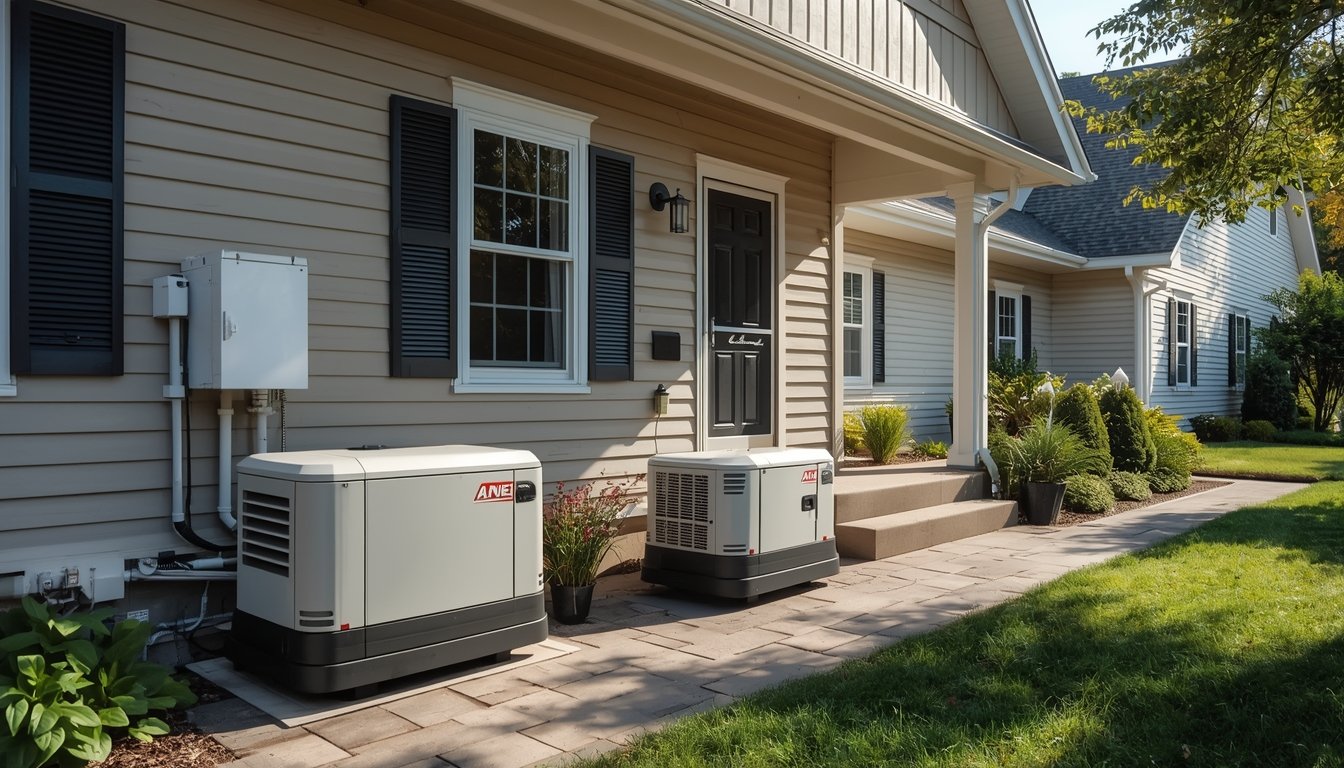
Yes, a backup generator can run central air conditioning, but the generator must be properly sized for both the startup and running wattage of your AC unit. Most home generators can only handle central AC if their output matches or exceeds the system’s heavy initial surge load. Undersized generators may trip breakers, fail to start the AC, or even damage sensitive components. The key is matching your central air’s requirements with the generator’s real-world power capacity, not just its advertised maximum output.
How to Determine If Your Generator Can Handle Central AC
Central air conditioning units need a significant amount of power, especially during startup. For example, a typical 3-ton AC system may need up to 8,000 watts to start but only 3,500 watts to run. It’s crucial to know both your AC’s running and surge wattage. Check the AC’s nameplate or the manual for these numbers. Then, compare them to your generator’s rated power and surge capacity, not just peak output.
If you’re sizing a new generator, always factor in additional household devices you want to run at the same time—refrigerators, lights, and medical equipment add up quickly. Ideally, leave a 15-20% buffer above your estimated maximum load for safety and longevity. For precise calculations, see the Whole-House Generator Sizing Guide. Remember: a transfer switch and professional installation are essential for running any large appliance, especially central AC, off a generator.
Key Considerations When Powering Your AC with a Generator
- Check the AC unit’s starting and running wattage—startup requires more power than running.
- Select a generator with enough capacity to start and run your AC alongside other essentials.
- Use an automatic or manual transfer switch for safe operation.
- Account for fuel type and run-time, as large loads drain fuel faster.
- Plan for regular maintenance—running heavy loads stresses the generator.
When evaluating your generator, don’t just look at the wattage sticker. Actual performance depends on generator age, fuel type, ambient temperature, and load-sharing. Professional consultation is recommended to avoid miscalculations. If you overload a generator, it may shut down or damage connected equipment. By planning with all factors in mind—including transfer switch installation and realistic load estimates—you reduce risks and ensure your generator will power your central cooling reliably during outages.
What If Your Generator Is Too Small?
If your generator is undersized for your central AC, several issues will arise. First, the air conditioner may fail to start, since the compressor’s surge load can trip the generator’s safety features. Running a generator at (or above) maximum output for sustained periods shortens its lifespan and can void warranties. Sensitive electronics within your HVAC system may also suffer damage from power fluctuations or dropouts.
You have a few options if your generator isn’t up to the task. One is to run smaller appliances and skip central AC during outages, using portable units or fans. Another option: a “soft start” kit reduces the AC’s initial draw, allowing a slightly smaller generator to work. Finally, consider upgrading your generator to meet the demands of central AC and your other home essentials. Accurate sizing matters for comfort, safety, and the health of your equipment.