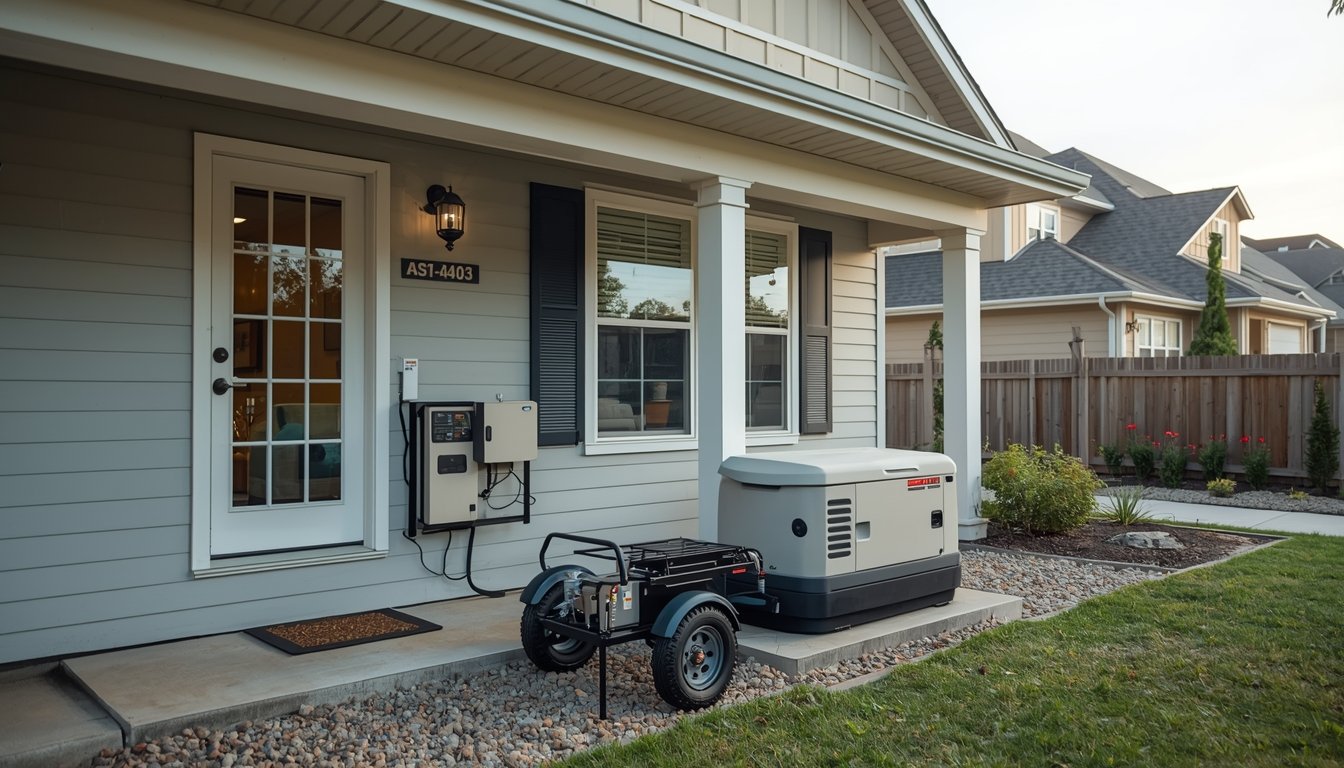
Standby and portable generators differ in how they are installed, powered, and used during a power outage. Standby generators are permanently installed outside a home and start automatically when the power goes out, while portable generators are mobile units that must be manually set up and turned on. If you want a generator that runs your whole house with no manual effort, standby is better; for flexible, on-demand backup with a smaller budget, portable generators are usually the go-to choice.
Main Differences in Installation and Operation
Standby generators are connected to your home’s electrical system and are permanently installed by professionals. These units require a fuel source, typically natural gas or propane, and automatically detect outages, switching on without any action from you. They also shut off by themselves when utility power returns. This means minimal interruption and full-home coverage, which is especially valuable in areas with frequent or lengthy outages.
Portable generators, on the other hand, must be rolled out, fueled up, and started by hand when needed. They plug into appliances or a few circuits via extension cords or a transfer switch. Installation is simple, requiring no professional setup, but manual work is needed every time you use one. Since they’re not permanently connected, you need to store them properly and ensure they’re in a safe, outdoor location during use to prevent carbon monoxide poisoning.
The choice largely hinges on convenience versus flexibility and how much of your home you need to power during an outage.
Power Output, Capacity, and Cost
Standby generators are designed to handle large electrical loads—including all home systems and sensitive electronics—during a blackout. Their capacity typically ranges from 7,000 to 22,000 watts or more. This allows you to run everything from your HVAC and refrigerator to lights and internet equipment, often without concern about overloading the system.
Portable generators offer far less output, commonly from 2,000 to 10,000 watts. This means you must prioritize what to power, such as just the refrigerator, a few lights, and a charging station. Overloading a portable generator can damage appliances or the unit itself. Costs also vary significantly; standby generators often require an investment from $3,000–$10,000 (plus installation), while portable models generally run $400–$2,500 depending on wattage and features.
Lower upfront costs make portable generators accessible for more people, but for peace of mind and full-coverage backup, many homeowners find standby systems worth the added expense.
Use Cases, Mobility, and Convenience Factors
- Standby generators are best for homes needing uninterrupted, automatic power for critical appliances and systems.
- Portable generators offer easy mobility and can be used for both home backup and recreational needs like camping.
- Portables require manual setup and fueling each time there’s an outage, while standby units start automatically.
- Standby systems usually connect to a permanent fuel source, whereas portables require gasoline or propane on hand.
Choosing the right type depends on how you plan to use backup power. Portable models are ideal for temporary, versatile needs or if you move frequently. Standby units are a fit if you need full-home power and hands-off reliability. For more on how these compare to newer backup solutions, check out Portable Power Stations vs Standby Generators for further guidance on selecting the best system for your situation.