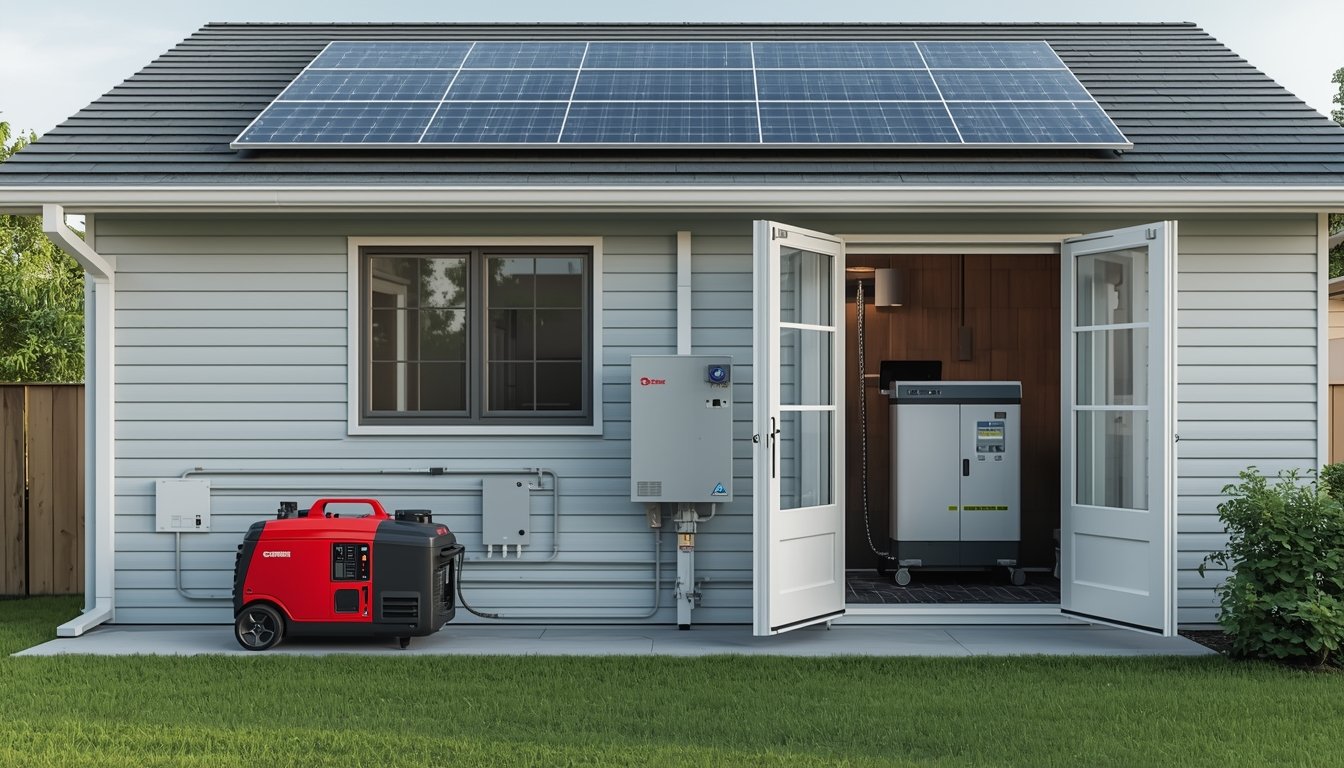
Solar panels alone cannot power your home during a blackout; you’ll also need a battery backup system. Without batteries, most solar systems automatically shut down for safety when the grid goes out, leaving your home without power. If you have a solar battery installed, your system can continue delivering electricity during outages, keeping key circuits running.
How Solar Systems Respond to Blackouts
Standard grid-tied solar panels are designed to stop working during blackouts. This is a safety measure to prevent electrical energy from being sent back through the grid, which could endanger utility workers making repairs. This means that even on a sunny day, your solar panels alone won’t keep lights or appliances running if the power from the grid is out.
However, hybrid solar systems with battery storage can operate independently during outages. When the grid fails, these systems disconnect from utility lines and continue to supply selected home circuits with battery power. Panels will recharge the battery as long as there’s sunlight, effectively letting your home run off-grid temporarily. The system often prioritizes essential loads to preserve stored energy for as long as possible.
If you want solar power to work when the grid is down, choosing the right configuration is crucial. A basic grid-tied system is not enough; you’ll need additional equipment and planning for blackout protection.
What You Need for Solar Backup Power
- Hybrid inverter to switch between grid and battery power
- Battery storage sized for your emergency needs
- Critical load subpanel for essential circuits
- Automatic transfer switch for seamless disconnection
A hybrid inverter is critical because it manages both grid and battery operations, allowing solar to power the home during outages. Battery capacity should cover important loads like refrigeration, lighting, or medical equipment. Setting up a subpanel dedicated to essential circuits ensures only necessary items run during blackouts, maximizing battery runtimes. An automatic transfer switch can make this transition smooth and quick by disconnecting you from the grid instantly when an outage occurs. These elements must work together for safe, reliable backup power from your solar system.
Planning for Reliable Solar Backup
To get reliable blackout protection, consult a qualified solar installer and evaluate your household’s priorities. List which appliances and systems you want powered during an outage. With this list, determine the battery capacity needed for your typical power usage and blackout length expectations.
Costs vary based on battery size, system complexity, and home requirements. A good next step is reviewing Solar Battery Backup Systems for Homes for insight into system configurations and options. Remember, older or simpler solar setups might require significant upgrades to enable blackout capability.
Periodic testing of your backup system is also wise. Storms and outages can strike unexpectedly, so regular maintenance will ensure the system works when you need it. Proper planning and the right technology provide peace of mind and ongoing comfort when the grid goes down.