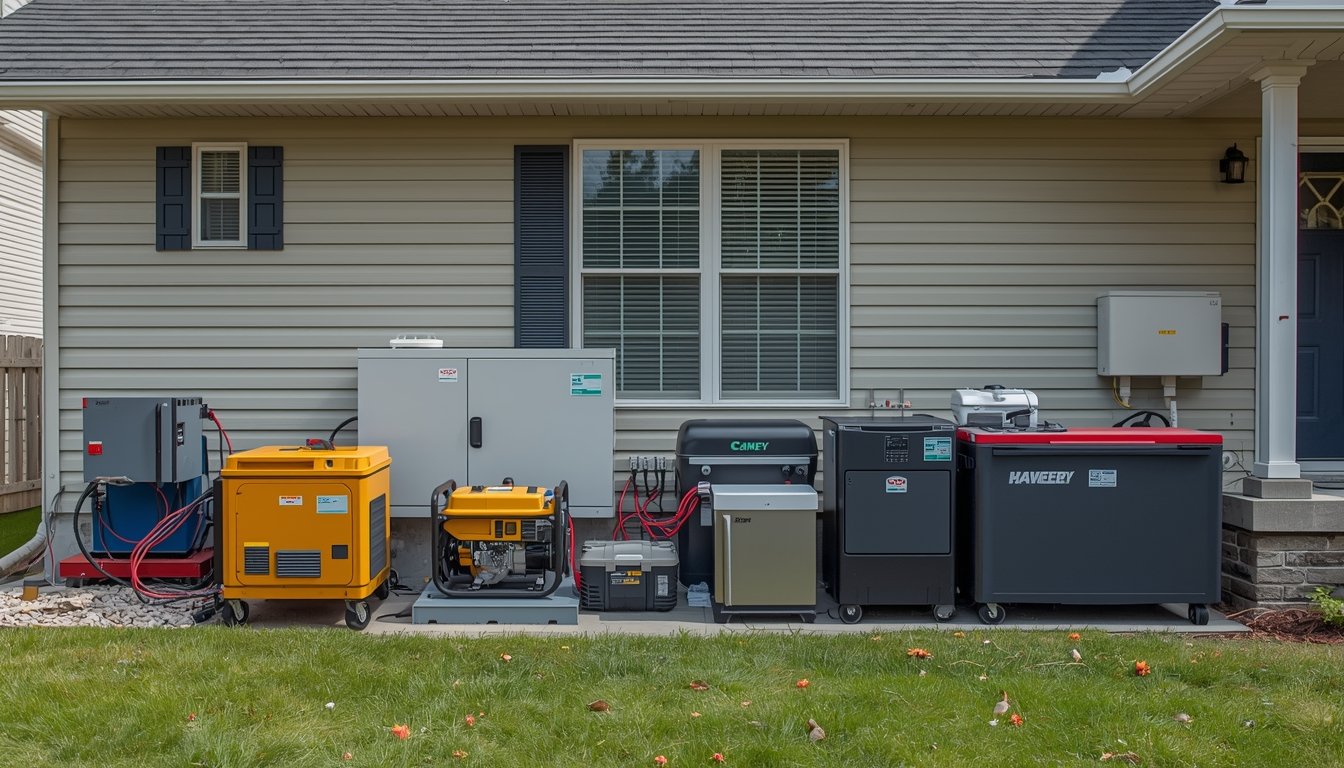
Home backup power systems ensure your essential appliances keep running during outages and grid failures. The main backup options include generators, battery systems, and hybrid solutions, each with unique benefits and limitations. Choosing the right backup power depends on your energy needs, home setup, and budget constraints. For more details on system choices and comparisons, refer to our comprehensive Home Backup Power Systems Guide.
Understanding the Types of Home Backup Power Systems
Homeowners can choose from three major types of backup systems: standby generators, portable generators, and battery backup systems. Standby generators run on fuels like natural gas or propane and are installed permanently outside the home. These systems automatically start during an outage, making them highly convenient for hands-off protection.
Portable generators are more affordable and flexible but require manual setup and regular refueling. They are typically smaller in capacity, best suited for running just a few critical devices. Battery backup systems, often paired with solar panels, store electricity for emergency use without fuel, noise, or emissions. These are appealing for homes prioritizing clean energy and quiet operation.
Increasingly, hybrid solutions combine traditional generators with battery storage, offering both immediate power and longer-term clean energy reserves. These options are evolving rapidly as battery prices fall and solar becomes more accessible. Ultimately, the right choice hinges on your priorities—whether automatic operation, low emissions, or upfront cost is most important.
Choosing Between Generators and Battery Backups
The primary distinction between generators and batteries lies in reliability versus sustainability. Generators can run continuously if supplied with fuel, making them suitable for long outages. Modern standby models can power most or all of a home’s circuits with minimal interruption.
Battery backup systems, while quieter and cleaner, are limited by storage capacity. They excel for shorter emergencies, often lasting a few hours to one or two days depending on the load. For those with existing solar panels, batteries seamlessly recharge during sunlight hours, extending their usefulness. Keep in mind, however, that batteries may not power high-consuming appliances or entire homes unless scaled up considerably.
Maintenance needs also differ. Generators require occasional oil changes, fuel management, and periodic testing. Batteries demand less routine maintenance but need software updates and eventual cell replacement. Evaluate your risk of prolonged blackouts and willingness to perform maintenance when determining the best backup power fit.
Key Features to Consider When Selecting a System
- Power Output and Capacity
- Automatic Startup and Transfer Switches
- Fuel Source and Availability
Firstly, ensure the chosen system can handle your critical loads—refrigeration, heating, lighting, and medical equipment as needed. Power output ratings, measured in kilowatts (kW) for generators and kilowatt-hours (kWh) for batteries, determine how much can run simultaneously and for how long. Check the manufacturer’s guidelines for sizing advice based on your home’s square footage and appliance list.
Automatic startup and transfer switches add convenience and safety. They ensure the backup system activates quickly without manual intervention, reducing downtime during unexpected outages. This is especially essential for those who travel or are away from home frequently.
Fuel source and availability play a crucial role. Standby generators are typically fueled by natural gas or propane, while portables can run on gasoline or diesel. Battery systems rely on stored electricity and may recharge from the grid or solar—making them ideal for regions with fuel delivery disruptions. Assess which fuels are reliable and affordable in your area to avoid surprises during emergencies.
Installation and Maintenance Considerations
Proper installation is vital for both safety and performance. Standby generators must be installed outside the home, maintaining clearance from doors and windows to avoid carbon monoxide risks. Professional installation is highly recommended, as this ensures compliance with local code requirements and manufacturer warranties.
Battery backup systems, especially those paired with solar, require correct electrical integration for safe operation. Experienced installers will handle wiring, load calculations, and system programming. DIY installation of backup systems is generally not recommended for beginners, due to the complexities and potential hazards.
Maintenance demands differ by system type. Generators need periodic oil and filter changes, fuel checks, and exercise cycles to prevent mechanical issues. Some modern models come with remote monitoring for hassle-free upkeep. Batteries typically require less hands-on maintenance but benefit from periodic software checks and ensuring optimal ambient temperatures to maximize lifespan.
Review local permitting requirements and available electrician support during your planning. Some areas require inspections or utility approval before backup systems can be connected. Investing in regular professional checks ensures long-term reliability and peace of mind.
Estimating Costs and Understanding Financial Incentives
- Upfront Equipment and Installation Costs
- Operating and Maintenance Expenses
- Available Tax Credits and Rebates
Upfront costs vary greatly between solutions. Standby generators often start around $3,000–$5,000 plus installation, while portable units may be under $1000. Battery systems tend to cost more initially, especially if paired with solar, with typical residential installations ranging from $10,000–$20,000 depending on capacity.
Ongoing costs should also be considered. Generators incur fuel and maintenance expenses, which can add up with frequent use. Battery backups have lower routine costs but will eventually require battery replacements every 7–15 years, depending on usage and cell quality.
Be sure to check for financial incentives in your area. Federal and state tax credits, particularly for solar and battery installations, can reduce net costs by 20%–30% or more. Some utilities even offer rebates or special rates for households installing backup power. Factor these savings into your long-term planning to maximize return on your investment.
Making Your Home More Resilient During Power Outages
Effective backup power is just one aspect of overall home resilience. Prioritize which appliances and circuits are most essential during emergencies. Many homeowners choose to back up critical loads—such as refrigerators, medical devices, or sump pumps—rather than the entire house, which helps stretch fuel or battery supply and reduces upfront costs.
Regular system testing and maintenance are key to ensuring your backup is ready when needed. Schedule periodic drills or checks to verify automatic start, transfer switches, and battery health. For those with solar panels, keep the modules clean and unobstructed to optimize recharging during daylight hours.
Consider additional preparedness measures: stock up on flashlights, portable chargers, and basic emergency supplies. Smart home technology, such as energy monitors and remote alerts, can also provide real-time performance data and outage alerts, letting you take rapid action. With the right planning, your home can stay safe, comfortable, and powered—no matter what the grid throws your way.