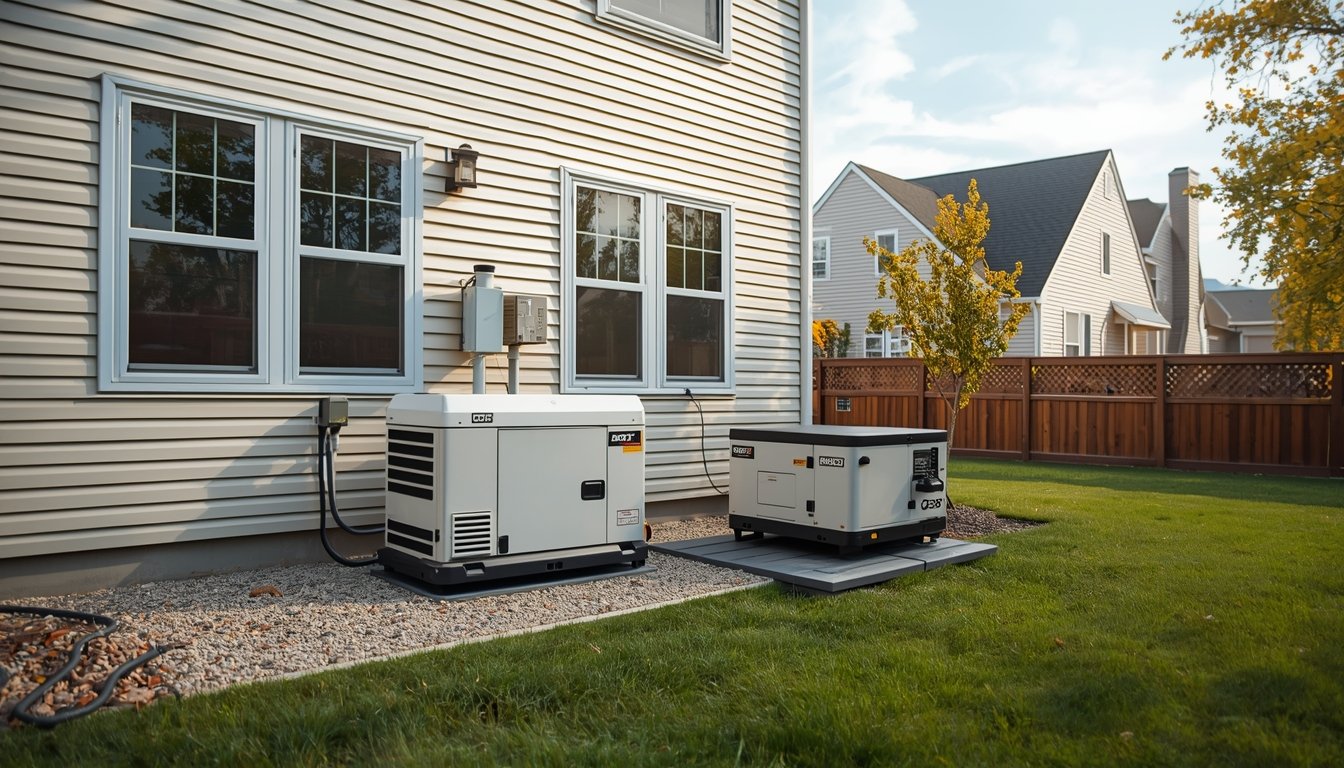
Most home backup generators operate at noise levels between 60 and 75 decibels when running, which is comparable to the sound of normal conversation or a vacuum cleaner. This means that while generators are noticeable, they’re not overwhelmingly loud for most people if installed properly. However, the actual sound you’ll hear depends on factors like the generator’s size, placement, and insulation features.
Noise Levels by Generator Type and Brand
Generator noise mainly depends on whether you’re using a portable or standby model. Portable generators typically run louder, averaging 70–80 decibels. Some can exceed 85 decibels, which is similar to standing near busy traffic. Standby generators, on the other hand, are engineered for quiet operation and usually run at a steadier 60–70 decibels, thanks to insulated enclosures and quieter engines.
Brands vary in their approach to noise reduction. For example, some premium models include special sound-dampening materials and low-RPM engines to cut down volume. Kohler and Generac, two well-known standby brands, often advertise “quiet-test” modes that reduce operational noise during regular self-checks. Still, real-world noise can be influenced by your surroundings; open spaces without barriers can make a generator sound louder compared to installations shielded by fences or shrubbery.
Ultimately, homeowners should review manufacturer decibel ratings and compare them to familiar household sounds to set expectations before installation.
Factors That Impact Generator Loudness
- Type of fuel used: Diesel units are generally louder than natural gas or propane models.
- Distance from living areas: Generators placed farther from occupied spaces will seem quieter.
- Enclosure and insulation: Well-insulated covers reduce sound escape effectively.
- Running load: Running at full power is noisier than operating under light loads.
Understanding these factors makes it easier to manage generator noise. For instance, choosing a natural gas standby generator and locating it strategically on your property can significantly lower perceived sound. Investing in soundproof enclosures or proper landscaping around the generator can also help. If noise is a top concern, ask for on-site noise measurements from your installer before finalizing plans. Paying attention to these details ensures you won’t be surprised by unexpectedly loud operation and can pick a system that fits your comfort level.
Solutions for Minimizing Disturbance
There are several practical steps to reduce generator noise inside and outside your home. First, always follow placement guidelines—locating your unit at least 20 feet from main living spaces is ideal. Using fences, walls, or shrubs as barriers between the generator and your house can deflect sound waves, minimizing what you hear indoors. Sound-absorbing enclosures are another effective option and can drop decibel levels by 5 to 10 dB.
Routine maintenance also matters. Well-serviced engines and mufflers operate quieter and last longer. Modern standby generators now feature quiet-test self-checks and efficient engines, so consider upgrading if you have an older, noisier unit. For a list of models specifically designed with low noise output in mind, check the Best Standby Generators for Home Backup guide.
Finally, always check local regulations regarding generator noise. Some neighborhoods have strict limits, so compliance helps avoid complaints or penalties.