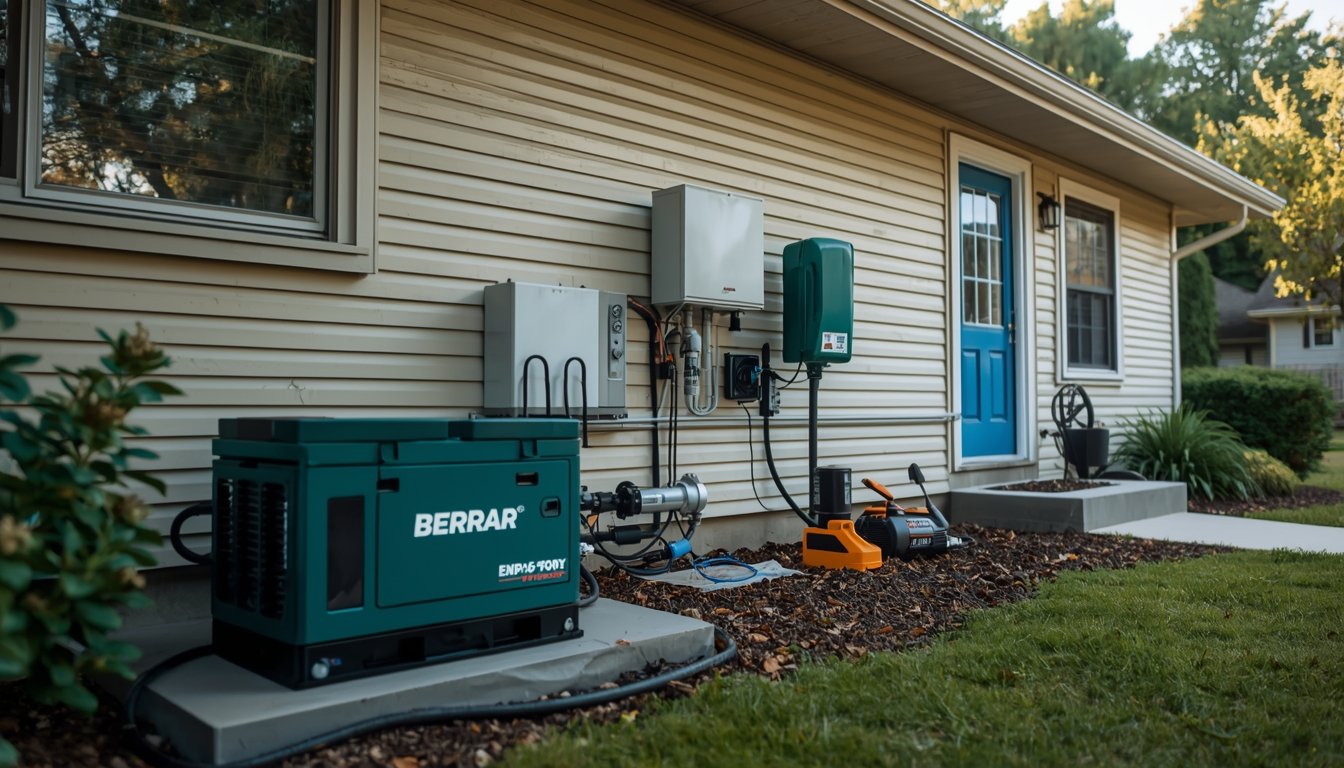
Choosing backup power for a large home comes down to balancing your household’s energy needs with the available systems. A larger property typically requires more robust solutions than a smaller house due to higher total wattage and the need to power multiple essential circuits. To make the right decision, it’s important to focus on system capacity, compatibility, and reliability before considering additional features or extras.
Why It Matters
When a power outage hits, larger homes face unique challenges that smaller properties often avoid. More appliances, greater square footage, and higher energy loads all demand a backup system that can deliver sufficient electricity for both safety and comfort. An undersized system can result in power shortfalls, while an overpowered one might cost significantly more without real benefit.
The consequences go beyond just keeping the lights on. Critical systems—like heating, cooling, medical equipment, security, and food refrigeration—require stable backup power to avoid costly or hazardous disruptions. Choosing well ensures peace of mind and practical security for your household during any outage.
Most Important Features to Prioritise
Focusing on essential features will guide you toward the most dependable system for a large home. These priorities help ensure your investment pays off with reliable backup when it’s most needed.
- Power Output Capacity: The system should meet or exceed your peak household wattage needs, especially if you want to run high-load appliances like central HVAC or well pumps.
- Fuel Type and Availability: For areas prone to lasting outages, choose a fuel source (natural gas, propane, diesel, or solar with storage) you can easily store or access as needed.
- Automatic Transfer: Automatic transfer switches quickly shift your home to backup power, reducing downtime and manual intervention during outages.
- System Scalability: Being able to expand your system—such as adding more batteries or generator modules—can be important if your needs change in the future.
- Installation Requirements: Confirm the system’s installation will work with your property’s electrical infrastructure and physical layout.
Taking time to assess these aspects ensures your backup solution aligns with your home’s typical and worst-case energy scenarios. For many large properties, central air and high-draw appliances are non-negotiable, so verify your system can handle short, high-demand bursts as well as steady, continuous loads. The right fit here means your home stays livable throughout any outage duration.
Features That Matter Less for Most People
While exploring options, you’ll see a range of added features and specifications. Not all will make a significant impact on your day-to-day experience. Focusing less on these can simplify your search and help you invest your budget where it counts.
Extras like smart monitoring apps, ultra-quiet operation, or designer enclosures can seem attractive, but they rarely influence the system’s actual performance during an emergency. Similarly, built-in USB chargers, fancy remote controls, or weatherproof coatings matter less if the fundamental power capacity and reliability aren’t right for your home.
It’s also common to see “parallel ready” features, exotic fuel compatibility, or advanced automation. Unless your situation specifically needs these, prioritise them only after you’re confident in the core system specs. Direct your focus to output, fuel reliability, and transfer safety first before weighing less critical extras.
How to Match Features to Your Situation
Every large home is different. Start by listing your essential circuits and appliances, noting which need to run at all times (such as refrigerators, sump pumps, and HVAC) versus those that can wait. Use this list to add up your total wattage and factor in any surge (starting) loads—especially from items like air conditioners or water pumps.
Next, consider your property’s access to fuel or sunlight. Homes in rural areas may need propane or diesel solutions, while those with stable natural gas lines—or a focus on sustainability—could opt for gas or solar-powered systems. Evaluate installation logistics, including space for generators, necessary permits, and local regulations, before making a final selection.
If your household has future expansion plans or changing needs (such as adding an electric vehicle or home addition), look for modular systems that allow easy upgrades. For detailed breakdowns and reviews of high-capacity options, the Best Home Backup Power Systems guide offers a comprehensive overview to match your choices to real-world performance and reliability.
Final Thoughts
Choosing backup power for a large home calls for careful planning, focusing on the genuine needs of your household. By prioritising output, fuel availability, transfer automation, and future expandability, you can identify a system that keeps your essentials running smoothly through any outage.
Resist the temptations of less meaningful features unless they directly improve your core experience during an emergency. Instead, perform a realistic wattage audit, plan for your property’s unique requirements, and select a solution aligned with your highest priorities. The result is a safer, more comfortable home even in the most challenging power situations.