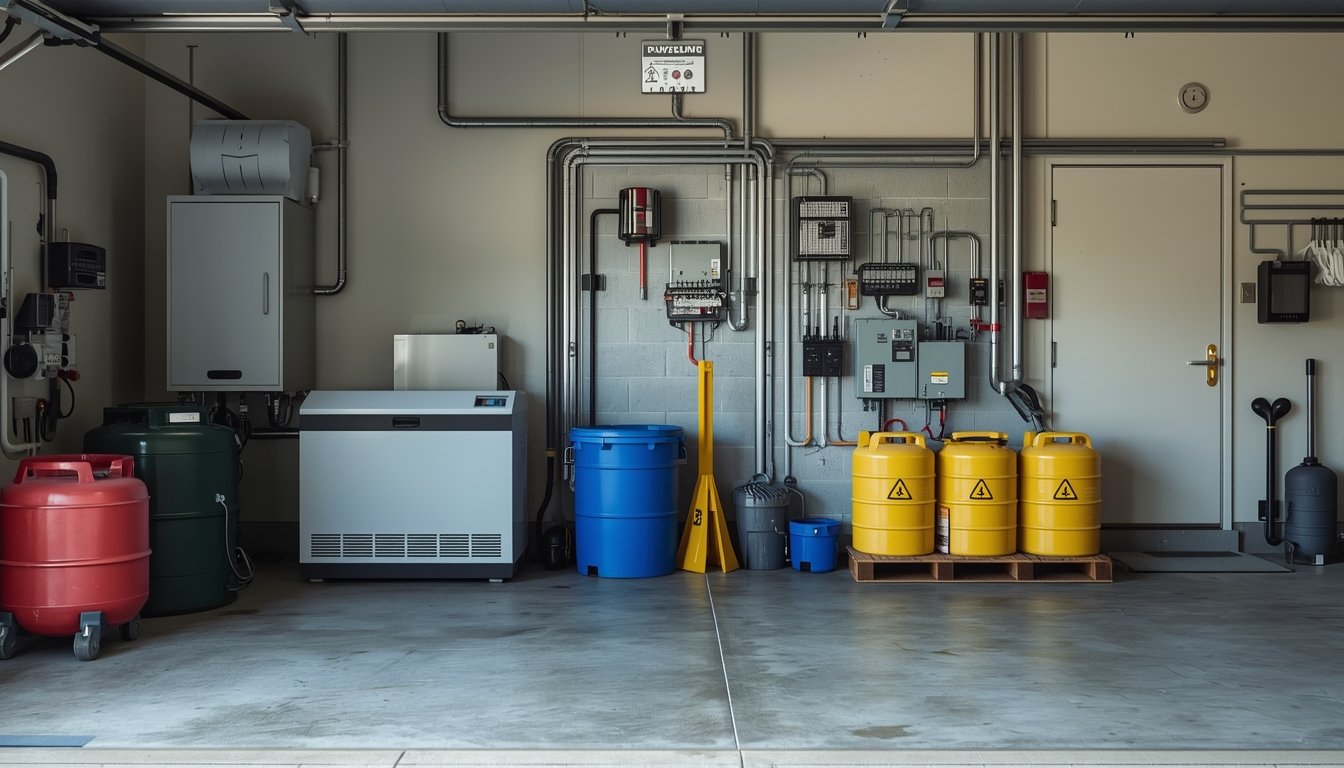
The safest way to store gasoline for a generator is to use approved, tightly-sealed containers, keep them out of living spaces, and place them in a well-ventilated, cool area away from ignition sources. Never store gasoline inside your home or attached garage, and always monitor storage dates to avoid fuel degradation. This approach reduces fire risk and preserves fuel quality for emergencies.
Choosing the Right Containers and Storage Environment
Select containers that are expressly designed and certified for gasoline storage. Usually, these are red, heavy-duty plastic or metal cans with locking caps and a clear label for fuel. Avoid using old water jugs or other makeshift containers—these can leak or fail under pressure.
Store containers in a stable, upright position on a level surface. Avoid placing them where children or pets can access them. A detached shed or standalone storage box, away from the house, offers the right environment. Make sure the area is dry, cool, and shaded to prevent gasoline expansion and vapor build-up.
Check container seals regularly for cracks or leakage. Ensure your storage space has adequate airflow to carry away any accidental fumes. In regions with temperature swings, climate-controlled storage helps prevent vapor pressure from building up. Following these steps minimizes the chance of an accidental ignition or harmful fumes reaching your home.
Limiting Risks: Amounts, Duration, and Fire Prevention
Only store as much gasoline as you reasonably need. For home generator use, most households rarely need more than 10–20 gallons on hand. Don’t exceed local or state storage limits, which often restrict residential gasoline amounts to avoid hazards.
Gasoline loses combustibility over time. Always label containers with purchase dates, and try to cycle your supply every three to six months. Using a fuel stabilizer extends shelf life if long-term storage is required, but always replace old fuel before the next storm or outage season.
- Keep gasoline at least 50 feet from ignition sources (pilot lights, electrical equipment, or tools).
- Do not smoke or use open flames near your storage area.
- Maintain a fire extinguisher rated for flammable liquids nearby.
- Keep containers sealed between uses to limit vapor escape.
By following these precautions, you reduce the risk of fire and exposure to harmful fumes. Even with all safeguards, accidents can still happen, so preparing for emergencies with a fire extinguisher and storing gasoline far from your home increases overall safety. Periodic checks ensure nothing has leaked or deteriorated. This vigilance is your best protection.
Handling and Using Stored Gasoline Safely
When refueling your generator, move both the container and the generator outdoors, away from homes and vehicles. Make sure engines are off and cool before pouring gasoline—hot engines can ignite fuel vapors instantly. Use a funnel or spout to avoid spills, and clean up drips immediately with disposable rags that are later sealed in a metal container.
Dispose of old gasoline at a hazardous waste facility—never pour it down drains or onto the ground. Periodically inspect gasoline supplies for any signs of water, cloudiness, or strong sour odors; these mean fuel has degraded and should not be used. Reseal containers tightly after every use.
For more information about different fuel options for generators, visit Fuel Types for Home Backup Generators. Proper handling, routine checks, and responsible disposal keep your generator running safely and efficiently whenever you need backup power.