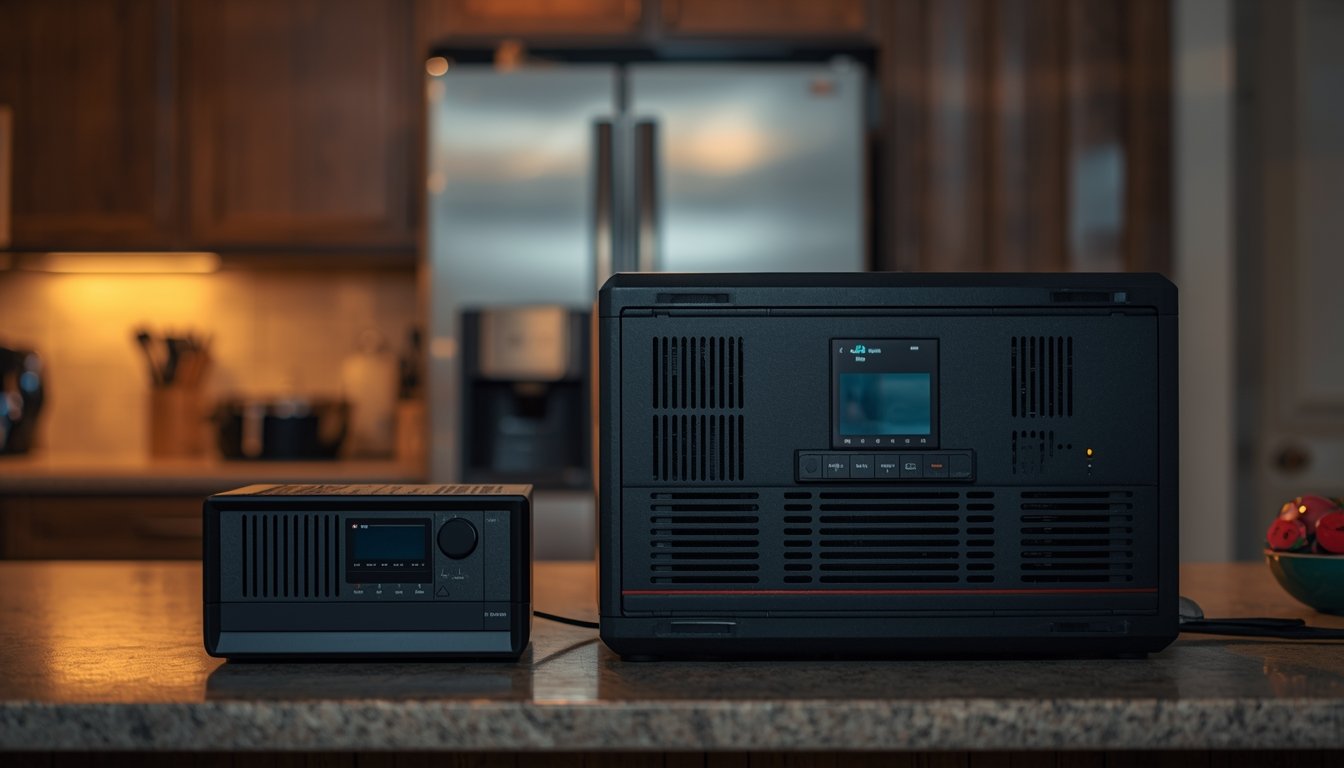
A small computer UPS is usually not the right backup power source for a refrigerator. A refrigerator has compressor startup demand, longer runtime needs, and appliance loads that many standard UPS units are not designed to handle.
A larger appliance-rated battery backup or portable power station is usually a better fit. A UPS may work only in limited cases where the unit has enough output, enough battery capacity, and the refrigerator’s startup surge is within its rating.
How It Works
A UPS is designed to provide short-term backup power when grid power fails. Many common UPS units are built for computers, routers, modems, and office equipment, not motor-driven appliances.
A refrigerator is different because the compressor may briefly draw more power when it starts. This startup surge can exceed the rating of a small UPS even if the refrigerator’s normal running watts look manageable.
Runtime is the second issue. A computer UPS may keep a desktop or router online for minutes, but a refrigerator outage plan often needs hours of backup. That makes battery capacity just as important as output rating. If you are comparing realistic appliance backup options, a guide to the best battery backup for refrigerator and freezer is usually more useful than looking at small UPS units.
What It Can Do
A UPS can be useful in narrow situations, but only when its specifications match the refrigerator’s needs. It should not be assumed to work just because it has standard outlets.
- Provide brief backup power for very small refrigeration loads if properly rated
- Bridge a short power flicker or momentary outage
- Protect control electronics on some appliances from sudden power loss
- Support low-power devices such as routers, modems, and alarm systems more reliably
The most realistic role for a UPS is short bridging power, not long refrigerator backup. If the outage is only a few seconds or minutes, a properly sized UPS may help in some cases. For food preservation during a longer outage, the battery size, inverter rating, waveform, and compressor startup handling become much more important. That is why many homeowners move from a standard UPS to a larger portable power station or dedicated appliance backup system.
Limitations and What It Cannot Do
A standard UPS cannot be expected to run a full-size refrigerator for hours unless it is specifically sized for that load. Many UPS units have small internal batteries and are intended to give users time to save files, shut down equipment, or keep networking gear online briefly.
It also cannot ignore startup surge. If the refrigerator compressor needs more power than the UPS can supply, the UPS may overload, shut down, beep continuously, or fail to start the appliance properly.
Another limitation is waveform quality. Some appliances may not run well on lower-quality modified sine wave output. A refrigerator backup system should be chosen carefully, especially if the appliance has sensitive electronics or variable-speed compressor controls.
When It Works Best
A UPS works best for small electronics that need uninterrupted power, such as routers, modems, computers, smart hubs, and security equipment. These loads are usually predictable and much easier for a standard UPS to support.
For a refrigerator, a UPS only makes sense if the power rating, surge rating, runtime, and output waveform are appropriate for the appliance. Even then, it is usually better viewed as a short-term bridge rather than a full outage solution.
If the goal is to keep food cold through a storm outage, a larger battery backup system is normally the more practical choice. The longer the outage, the more important stored energy and recharge options become.
Common Misconceptions
One common misconception is that any backup battery with an outlet can run a refrigerator. In reality, compressor startup demand can make a refrigerator harder to power than its running watts suggest.
Another misconception is that UPS runtime estimates for computers apply to appliances. Refrigerator cycling, surge demand, and appliance efficiency make the calculation different.
It is also misleading to assume a UPS is safer for every appliance. Safety depends on correct sizing, output type, ventilation, manufacturer guidance, and whether the equipment is being used within its rating.
Final Answer Summary
A UPS can sometimes provide very short backup power for a refrigerator, but it is usually not the best choice for real outage protection. Most standard computer UPS units are too small for compressor startup and long appliance runtime.
For refrigerator backup, use a properly sized appliance-capable battery system or portable power station instead. The backup should match the refrigerator’s startup demand, average power use, and the outage length you are planning for.