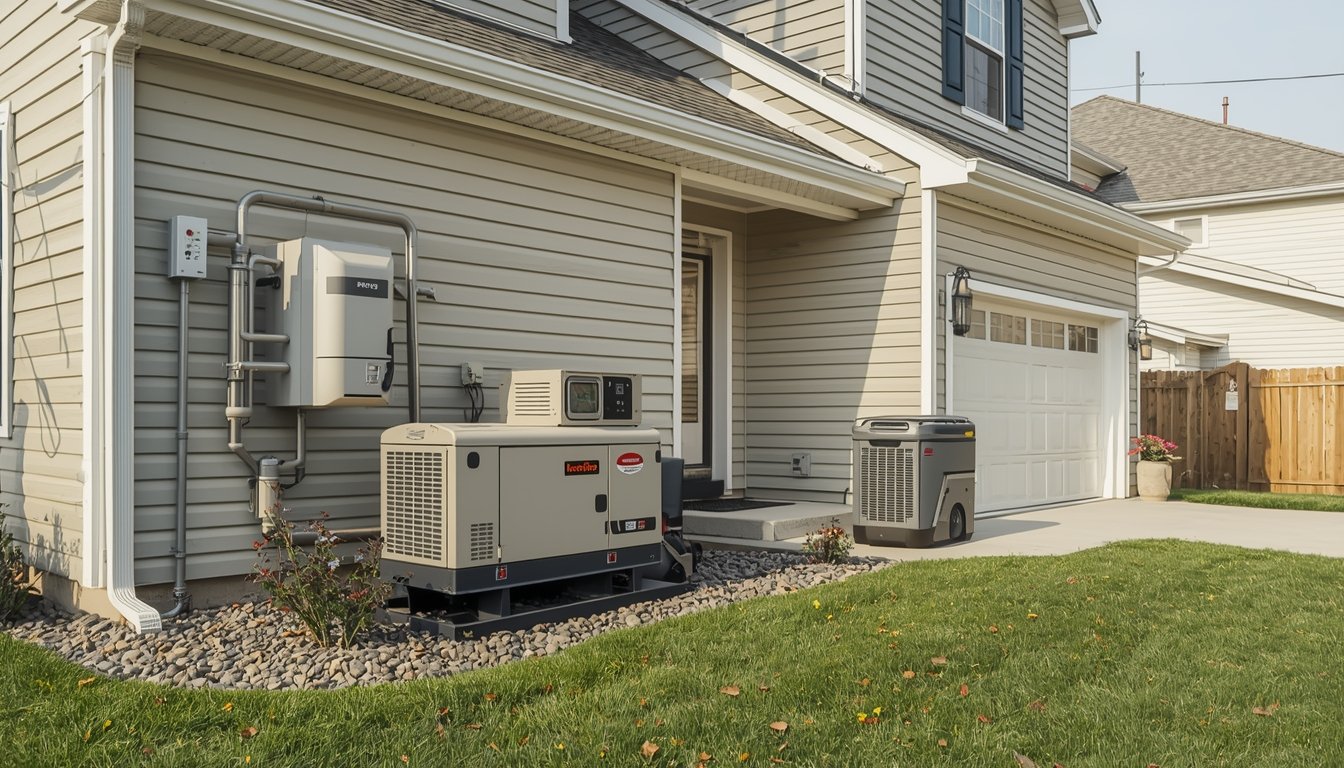
A generator’s runtime on propane or natural gas depends mainly on its fuel consumption rate and the amount of available fuel. Most portable generators will run about 8–12 hours on a standard 20-pound propane tank at half load. Standby generators connected to large propane tanks or natural gas lines can often operate for 24 hours or longer, as long as fuel supply continues. Actual runtime varies based on generator size, model, load, and fuel availability.
Typical Runtimes: Propane vs. Natural Gas
On propane, runtime is usually limited by tank capacity. For example, a 9-kilowatt standby generator running at half load might use about 1.2 gallons of propane per hour. A standard 100-gallon tank could fuel it for around 80 hours if used non-stop at that load. Smaller portable models with a 20-pound propane tank might only last 8–10 hours before refueling is needed, especially at higher loads. Larger tanks extend runtime but require more storage and cost.
Natural gas generators, by contrast, are typically hooked up to a utility supply. This allows them to run as long as the natural gas supply remains steady. Such generators commonly back up homes for 24-hour periods or even several days during outages. However, natural gas supply can be vulnerable in major emergencies or disasters, affecting runtime potential. Generator efficiency and maintenance also play a role in overall fuel consumption for both fuel types.
Factors That Influence Generator Runtime
Several factors impact how long your generator will run on propane or natural gas. Generator size is crucial: larger units consume more fuel per hour, reducing overall runtime from a fixed supply. Electrical load is another key aspect. Running more or higher-powered appliances increases fuel consumption and shortens runtime. Keeping the load closer to half of the generator’s maximum output can extend fuel use considerably.
Ambient temperature and elevation subtly affect engine performance and fuel use. Cold weather can lower propane tank pressure, while altitude may reduce engine efficiency, both leading to decreased runtime. Maintenance also matters—dirty air filters or worn spark plugs can make engines less efficient, increasing fuel use. Following the guidelines in Generator Fuel Consumption and Runtime Planning can help estimate fuel needs accurately and identify ways to improve generator efficiency in your specific situation.
Practical Runtime Planning Tips
- Match generator size to your essential loads to avoid unnecessary fuel waste.
- Regularly monitor fuel levels and have backup tanks or supply plans for longer outages.
- Service your generator as recommended to keep fuel consumption low and ensure reliability.
- Consider investing in automatic transfer switches for seamless runtime during outages.
Smart planning maximizes your generator’s runtime while minimizing risk. Choosing a generator that fits your needs helps avoid overuse and saves fuel. Proper installation, including the right tank size or secure natural gas connections, supports longer operation. Routine maintenance and monitoring allow you to detect issues early and ensure your system operates smoothly, even during extended power outages. Being proactive about fuel supply and generator health is the best way to ensure power when you need it most.