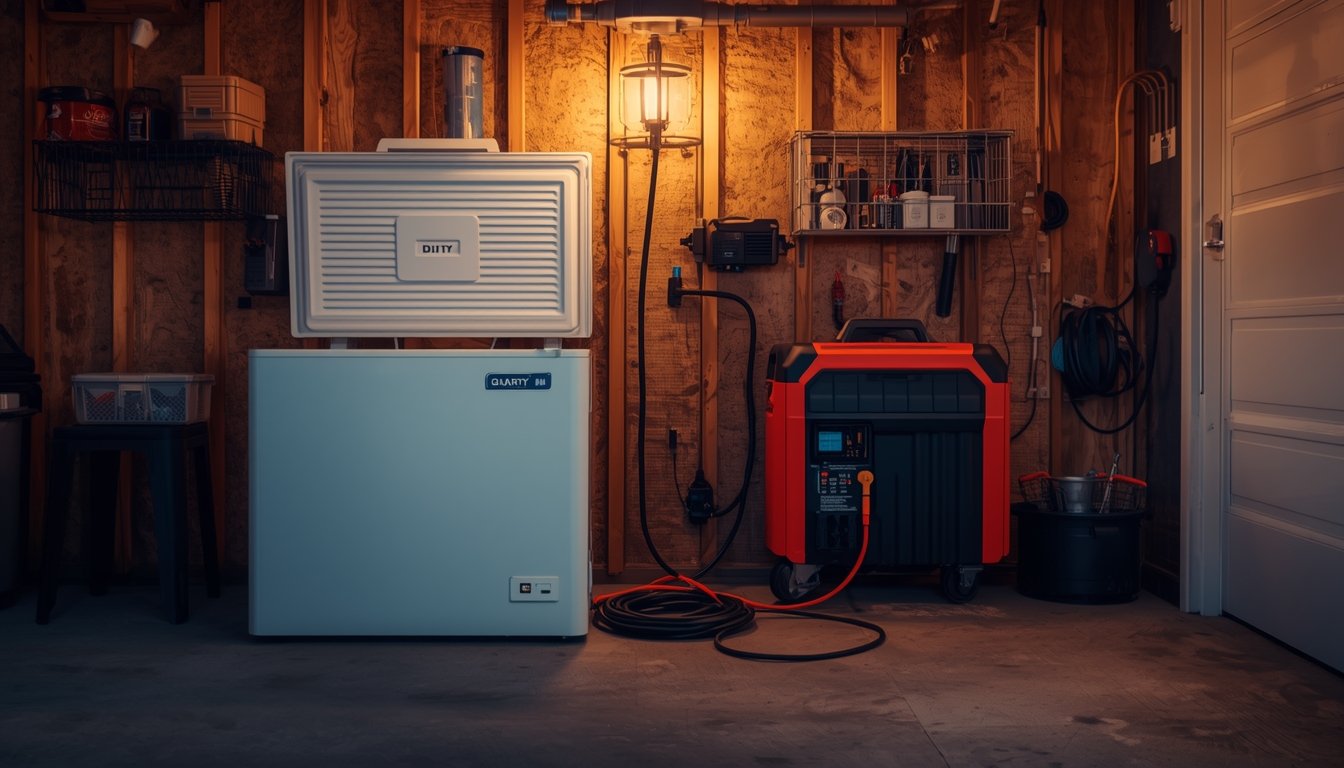
For most freezers, a battery backup should usually start around 1,000Wh for short outages and move closer to 2,000Wh or more if you want longer protection. Chest freezers often hold cold well when kept closed, but the backup still needs enough output for compressor startup and enough stored energy for the expected outage length.
The right size depends on the freezer type, room temperature, how full it is, how often it is opened, and whether anything else is connected to the same battery.
Start With Freezer Type and Power Demand
A freezer does not use power in a steady line. Like a refrigerator, it cycles on and off as the compressor works to maintain temperature, so average power use matters more than the momentary draw shown during startup.
A chest freezer may be easier to protect during an outage because cold air tends to stay inside when the lid remains closed. An upright freezer can lose cold air faster when opened, so it may need to cycle more often once backup power is connected.
For a single freezer, a 1,000Wh portable power station may be enough for shorter outages, but it leaves limited margin. If the freezer is older, stored in a hot garage, or protecting valuable frozen food, a larger 2,000Wh battery gives a safer buffer. If you are comparing real options, the best battery backup for refrigerator and freezer guide is the better place to compare product choices.
When to Size Up the Battery
You should size up when the freezer is not the only load or when the outage risk is more than a few hours. A small battery may work briefly, but longer outages expose weak sizing quickly.
- Choose more capacity for a freezer kept in a hot garage or utility room.
- Size up if you also need to run a refrigerator from the same battery.
- Allow extra margin for older freezers with uncertain startup demand.
- Use a larger battery if outages in your area often last overnight.
- Add capacity if you need phone charging, lights, internet, or medical devices too.
The biggest mistake is sizing the battery only for ideal conditions. Freezers use less energy when kept closed and already cold, but real outages often happen during storms, heat waves, or grid failures when the surrounding temperature may be higher. A larger battery does not guarantee unlimited runtime, but it gives more time before you need solar charging, generator charging, or grid power to return.
Practical Sizing Recommendation
For a freezer-only backup plan, use 1,000Wh as the minimum practical starting point for short outages. This can make sense if the freezer is efficient, already cold, mostly full, and kept closed during the outage.
For more reliable protection, especially overnight, a 2,000Wh class battery is the safer target. That extra capacity gives more room for compressor cycling, inverter losses, warmer rooms, and imperfect conditions.
If you want to back up both a refrigerator and freezer, or if food loss would be expensive, move beyond the minimum. A larger power station or expandable battery system is more sensible than trying to stretch a small battery too far.
The final choice should match your real outage pattern. Short interruptions need less capacity, while long storm outages need a larger battery and a recharge plan.