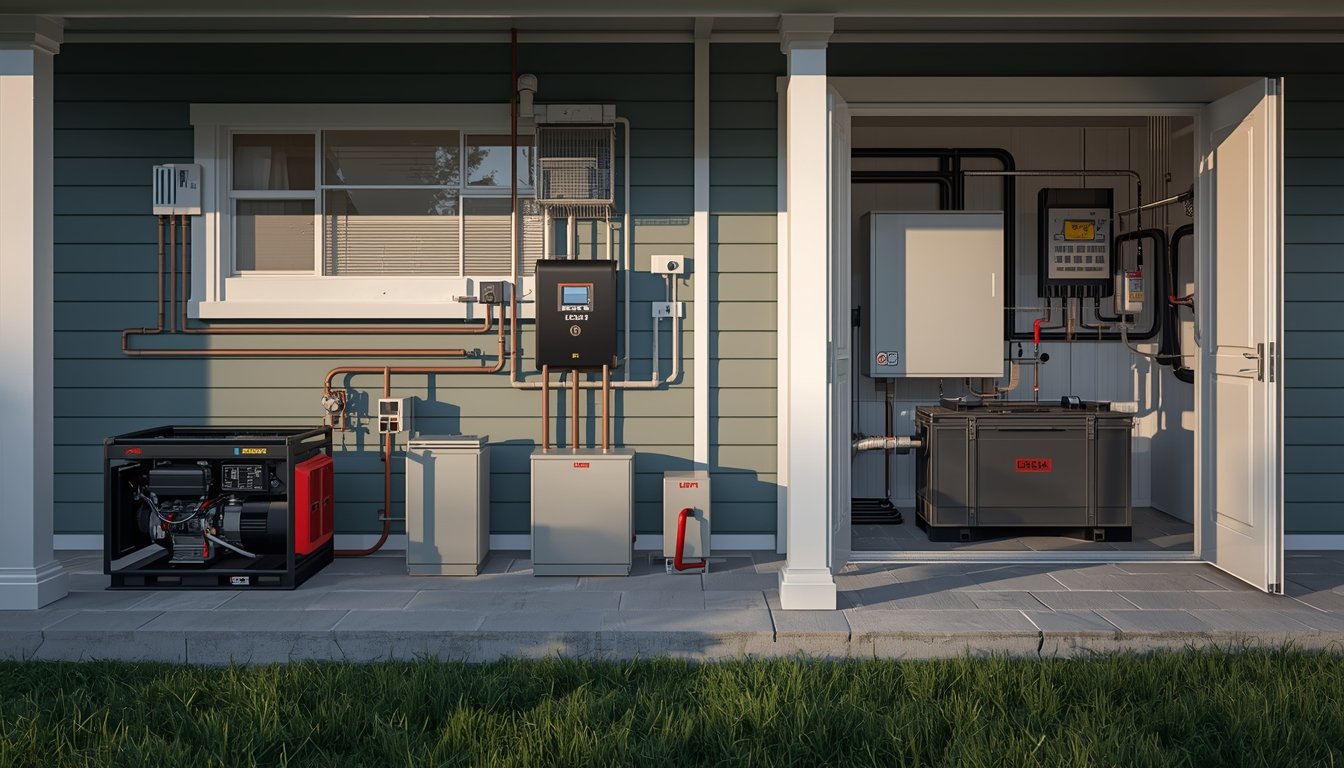
Gasoline, propane, natural gas, and diesel are the main fuel types used for home backup generators. Each fuel offers distinct benefits and drawbacks based on availability, cost, storage, and maintenance. For most homeowners, the optimal fuel type depends on personal priorities such as convenience, local infrastructure, and long-term reliability. You’ll also need to consider factors like how fuel efficiency impacts your generator’s runtime, which makes resources like Generator Fuel Consumption and Runtime Planning useful in the decision process.
Gasoline Generators
Gasoline-powered generators are commonly chosen for home backup power due to their accessibility and affordability. Gasoline is widely available at gas stations, making refueling straightforward during short-term outages. These generators also tend to have a lower upfront cost compared to units fueled by propane or diesel.
However, gasoline has some notable downsides. It is highly flammable and can be dangerous to store in large quantities. Gasoline also has a relatively short shelf life, often degrading within 3 to 6 months unless stabilizers are used. During widespread power outages that disrupt fuel deliveries, gasoline may become difficult to obtain.
Engine maintenance for gasoline generators can also be more demanding because gasoline burns less cleanly, leading to carbon buildup. In colder climates, starting gasoline engines can be challenging without proper upkeep. Despite these concerns, gasoline generators are often selected for their ease of use and low initial investment.
For homeowners who require only occasional backup power and who can manage the safety aspects of storage, gasoline remains a practical option. Thoughtful storage and maintenance planning are essential to maximize long-term reliability.
Propane Generators
- Propane is storable for years without degrading
- Refueling requires compatible tanks or delivery service
- Burns cleaner, leading to less engine maintenance
Propane-powered generators are praised for their clean-burning characteristics and long-term fuel stability. Unlike gasoline, propane can be stored indefinitely in proper tanks, making it well suited for homeowners who want to prepare in advance for extended outages. Because propane doesn’t degrade, there’s no need for fuel additives or frequent rotation of storage stock.
One of the main challenges with propane is ensuring you have enough fuel on hand. Generators require a steady supply, which may mean larger tanks or more frequent deliveries during prolonged emergencies. Still, the convenience and availability of exchangeable propane tanks at many retailers make smaller systems attractive. Cleaner combustion means reduced engine wear, translating to lower maintenance costs in the long run. For many, the investment in a propane-ready generator is justified by the peace of mind that comes from having reliable, long-term fuel availability.
Natural Gas Generators
Natural gas generators offer unparalleled convenience if your home already has a natural gas line. These units can deliver virtually unlimited operation time, limited only by your utility provider’s infrastructure. Natural gas is also among the cleanest options, leading to less frequent maintenance compared to gasoline or diesel alternatives.
One drawback is the total reliance on utility infrastructure. In the event of a disruption to the natural gas supply—such as after an earthquake or major storm—your generator may not function. Additionally, installation costs can be higher since many homes require professional plumbing updates to safely connect a generator to the gas line.
Despite these considerations, natural gas generators are valued for their seamless integration and “set-and-forget” usability. They are especially popular for whole-house backup systems, where automatic transfer switches ensure that power is restored within seconds of an outage. Homeowners who prefer ongoing, low-maintenance performance often prioritize natural gas for its reliability and ease of use. However, it’s wise to assess the local utility’s historical reliability before making a final decision.
Diesel Generators
- Diesel engines are highly fuel efficient and durable
- Fuel can be stored long-term with proper additives
- May require additional soundproofing due to noise
Diesel-powered generators are a preferred option for those seeking consistent reliability and longer runtimes. Diesel fuel, when stored with stabilizers, can last up to two years and is less flammable than gasoline, making it a safer option for larger storage. The robust construction of diesel engines supports heavy-duty workloads and extended use, making these systems a staple in commercial and rural settings.
However, there are some trade-offs. Diesel generators can be significantly louder than their propane or natural gas counterparts, prompting some homeowners to install them farther from living areas or invest in sound-dampening enclosures. Diesel fuel is also subject to availability issues during prolonged emergencies, though typically less so than gasoline. While initial purchase prices are often higher, the long service life and high efficiency of diesel units mean reliable backup power in demanding conditions, provided that periodic maintenance is not neglected. Diesel stands out where heavy loads or frequent extended power outages are a concern.
Dual-Fuel and Tri-Fuel Options
Dual-fuel and tri-fuel home generators combine flexibility with added peace of mind. These models can operate on more than one fuel type—usually gasoline and propane, or propane and natural gas—allowing homeowners to switch based on fuel availability or storage preferences. This adaptability means you can use whichever fuel is easiest to obtain or store during emergencies.
While dual-fuel systems are often slightly more expensive than single-fuel models, many homeowners find the investment worthwhile. If gasoline supply is interrupted, you can pivot to propane or natural gas. For short outages, gasoline might be simplest, but for long-term events, having a bulk propane tank or a connected natural gas line ensures extended operation.
Maintenance may differ slightly depending on which fuel you use. Generally, propane and natural gas lead to less engine wear, while gasoline may require more frequent upkeep. Flex-fuel models also require you to understand basic procedures for switching fuels safely. Overall, dual-fuel or tri-fuel units offer the ultimate in flexibility, making them a solid choice for those who want to maximize their home’s resilience to various outage scenarios.
Choosing the Best Fuel Type for Your Needs
Selecting the optimal generator fuel type comes down to your family’s priorities and unique circumstances. Start by evaluating questions such as your regular access to each fuel, available storage space, and local infrastructure reliability. Consider how long your home is likely to need backup power during typical and worst-case outage scenarios.
Assess the safety protocols for storing gasoline or diesel, and the feasibility of installing propane tanks or natural gas connections. Maintenance expectations and noise levels may also factor into your decision. If ultimate reliability is your goal, a dual- or tri-fuel model may offer the greatest peace of mind.
Don’t overlook local restrictions or regulations that might affect storage limits or generator installation, especially in urban or wildfire-prone zones. For deeper insight on how fuel choice impacts your generator’s performance, runtime, and refueling logistics, refer to resources such as Generator Fuel Consumption and Runtime Planning. Careful consideration now ensures you select the right generator to safeguard your home, no matter what comes.